Acquired by Kahoot! (2021)
Secure access to learning apps
Secure access to learning apps
25M+ users / 90K+ schools
25M+ users / 90K+ schools
At a glance
Role: Founding UX lead (brand + web identity, early system patterns)
Surfaces: Marketing site, product/solution pages, trust & security messaging
Primary audience: District decision-makers, IT admins, educators
Design intent: Make Clever feel simple, credible, and safe—while scaling the site through reusable patterns
Relevant contributions (from the broader Clever scope)
The work in this web identity case study sits inside a broader platform effort. The most relevant overlaps here:
Defined and implemented a unified interaction model and design system across dashboards and integrations, reducing design-to-development time 45% and increasing engineering velocity.
Embedded accessibility standards into the system, ensuring WCAG 2.0 compliance across core flows and patterns.
Partnered with engineering to optimize performance and data flow, improving load times 28% while maintaining reliability at national scale.
Setting the Foundation
Clever’s product value was big—but hard to explain quickly: identity, interoperability, and secure access across district infrastructure.
The public web experience needed to do a few things at once:
Establish trust (student data, FERPA, district security expectations)
Explain a complex platform in plain language for non-technical decision-makers
Support a growing set of solutions, partners, and proof points without the site becoming inconsistent or slow to update
This wasn’t just “marketing design.” It was a systems problem: how do we build a web identity that can scale with the company while staying coherent?
Approach: design system thinking applied to public web
Instead of designing each page as a one-off, I treated the site as a set of reusable building blocks.
Define the message hierarchy
A district buyer’s questions are predictable:
Is this safe?
Will it work with our identity systems?
Will it reduce classroom friction?
Can we roll it out without a huge services burden?
The site structure and modules were designed to answer those questions in the right order.
2. Build repeatable modules
Pages were composed from a constrained set of patterns:
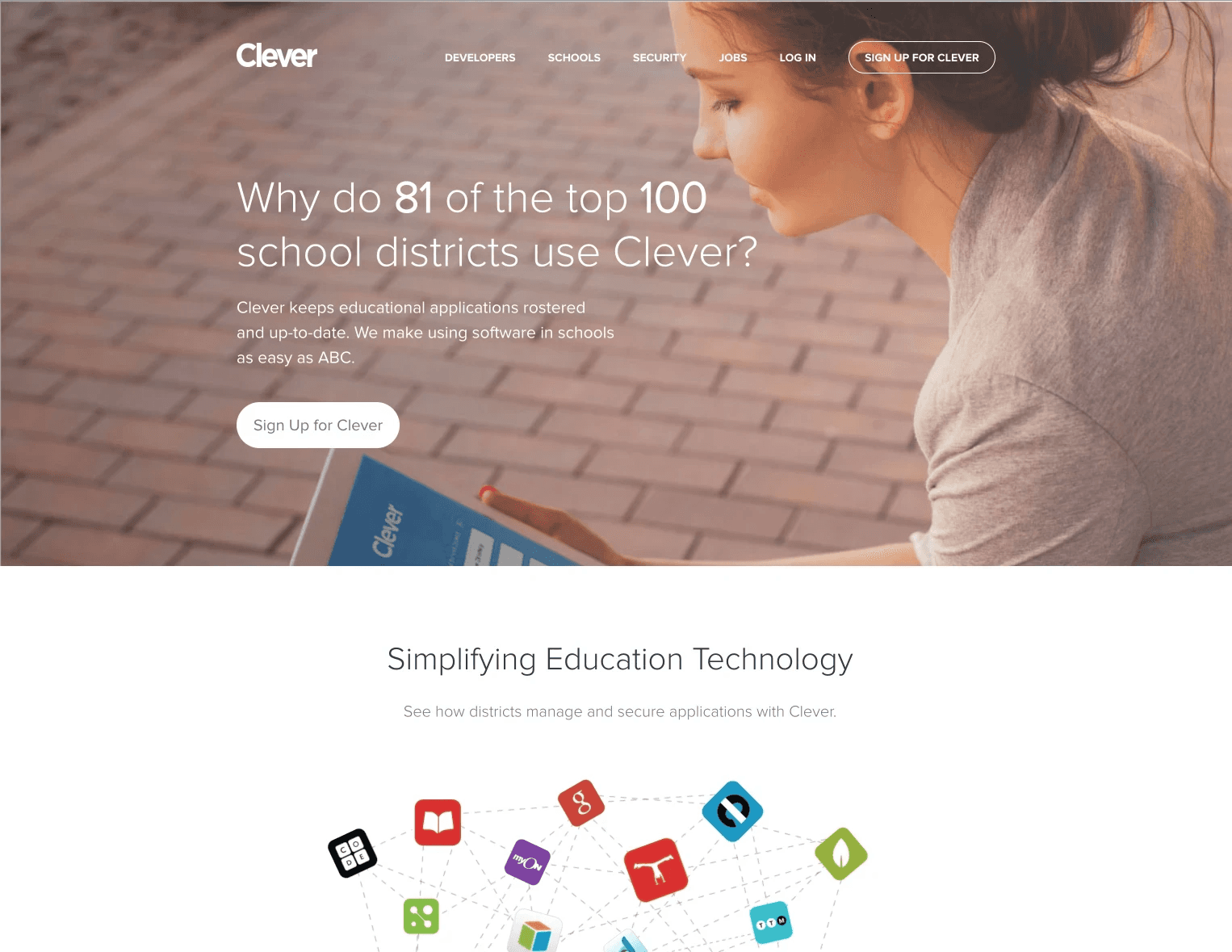
Hero + positioning
Proof blocks (stats, district adoption, logos)
“How it works” explainers
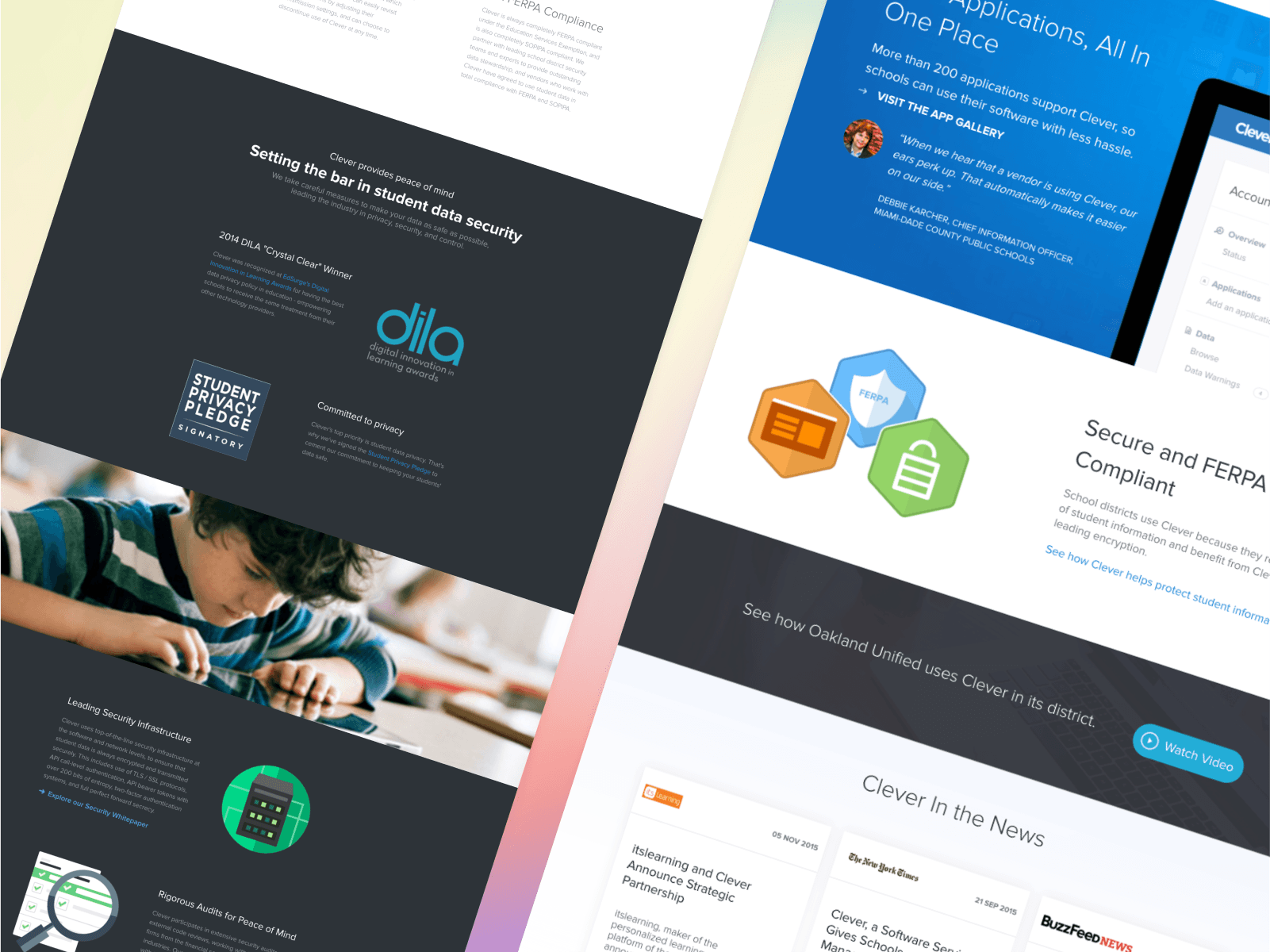
Trust/security sections
Feature cards + comparison-friendly layouts
CTA system that didn’t fight the narrative
Make consistency a feature
Consistency reduced cognitive load for readers and sped up shipping for the team:
predictable spacing + typography rhythm
reusable card and icon systems
repeatable section sequencing across solutions
System primitives (tokens → components → pages)
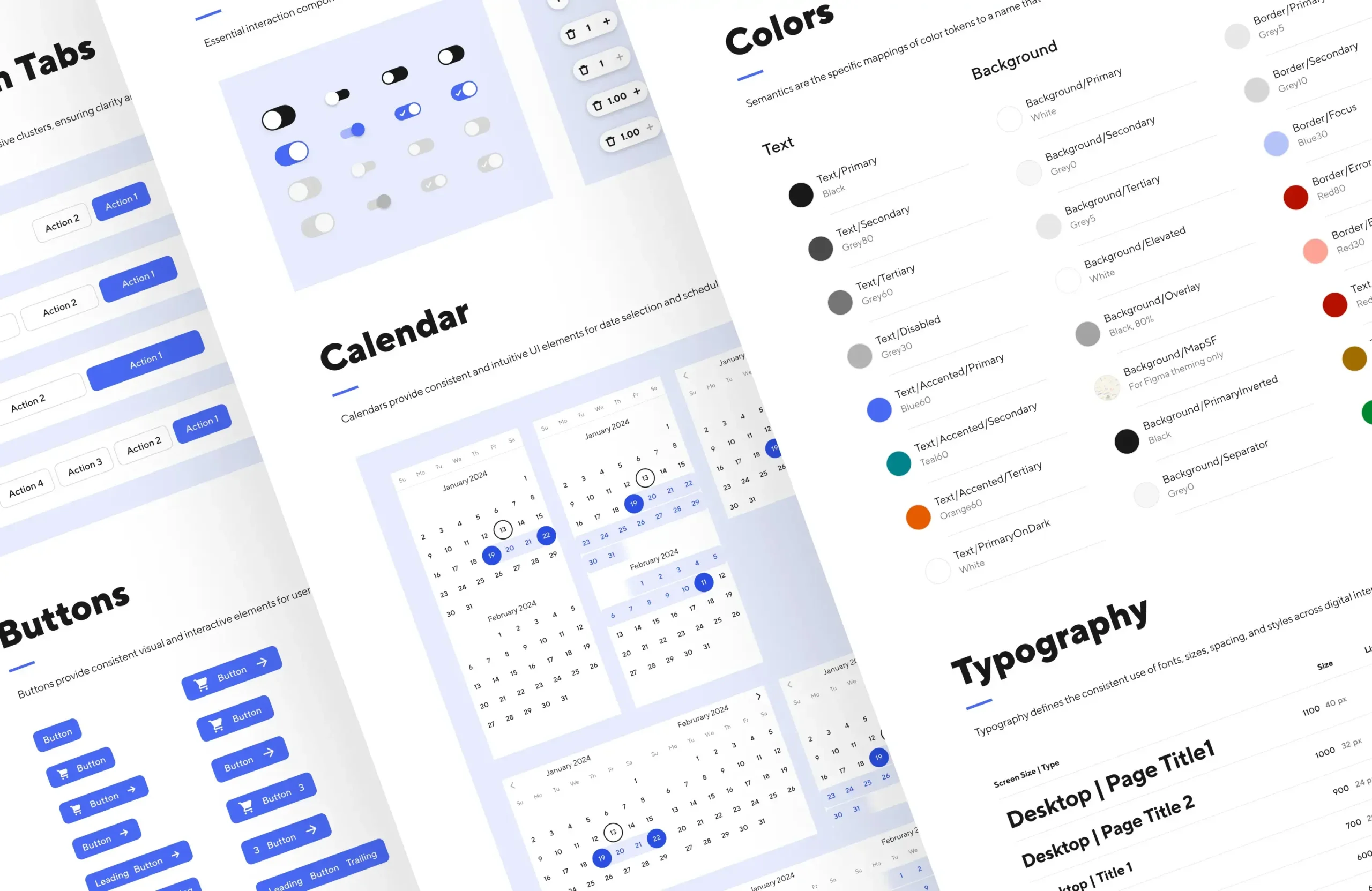
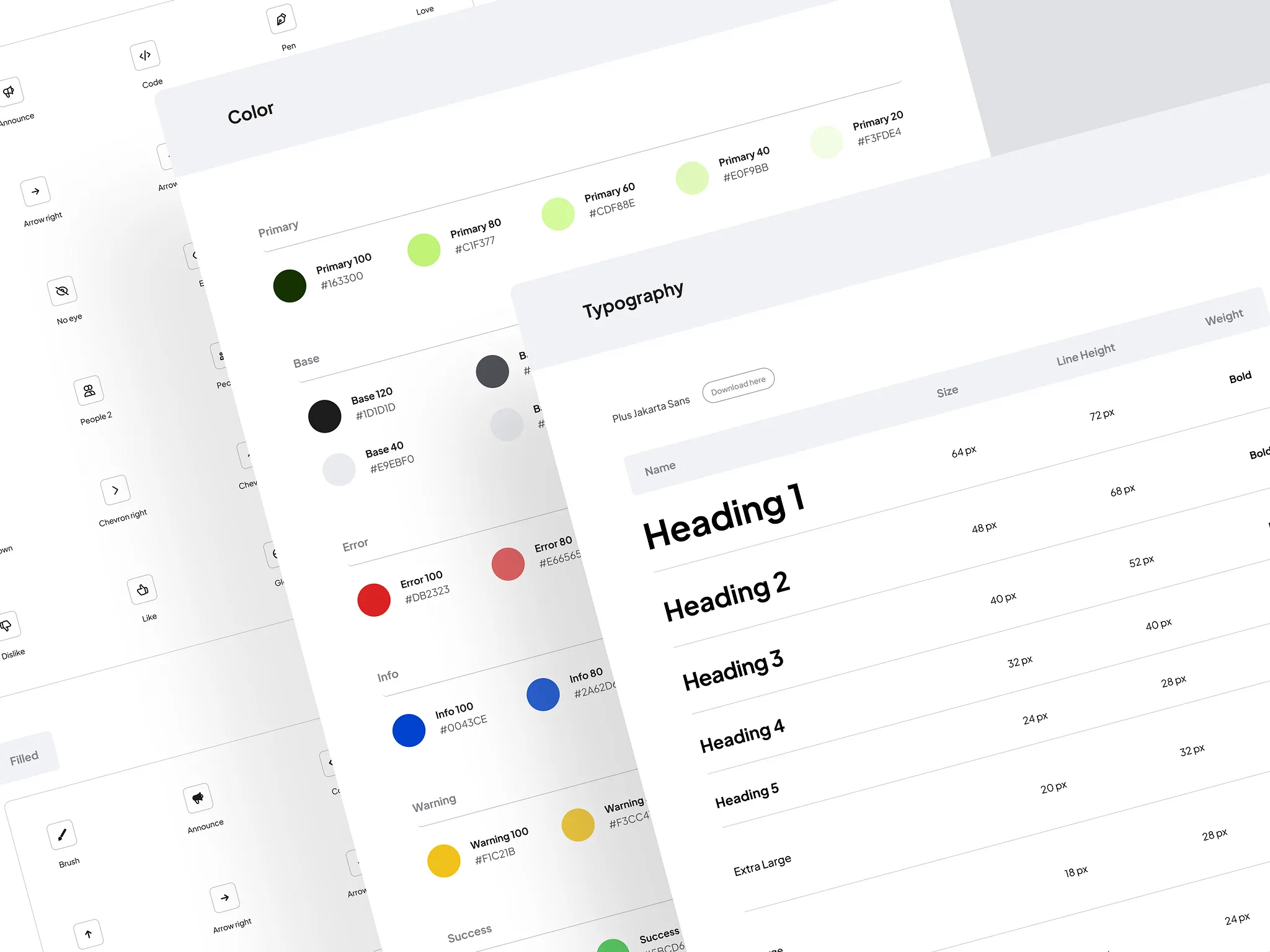
To keep the site coherent as it expanded, I anchored the web identity in a small set of primitives—type scale, color semantics, spacing rhythm, and reusable UI components—so new pages could be assembled from patterns instead of redesigned from scratch.
predictable spacing + typography rhythm
reusable card and icon systems
repeatable section sequencing across solutions
System primitives: typography + color semantics
Component library: repeatable UI patterns used across modules
Web identity and messaging system
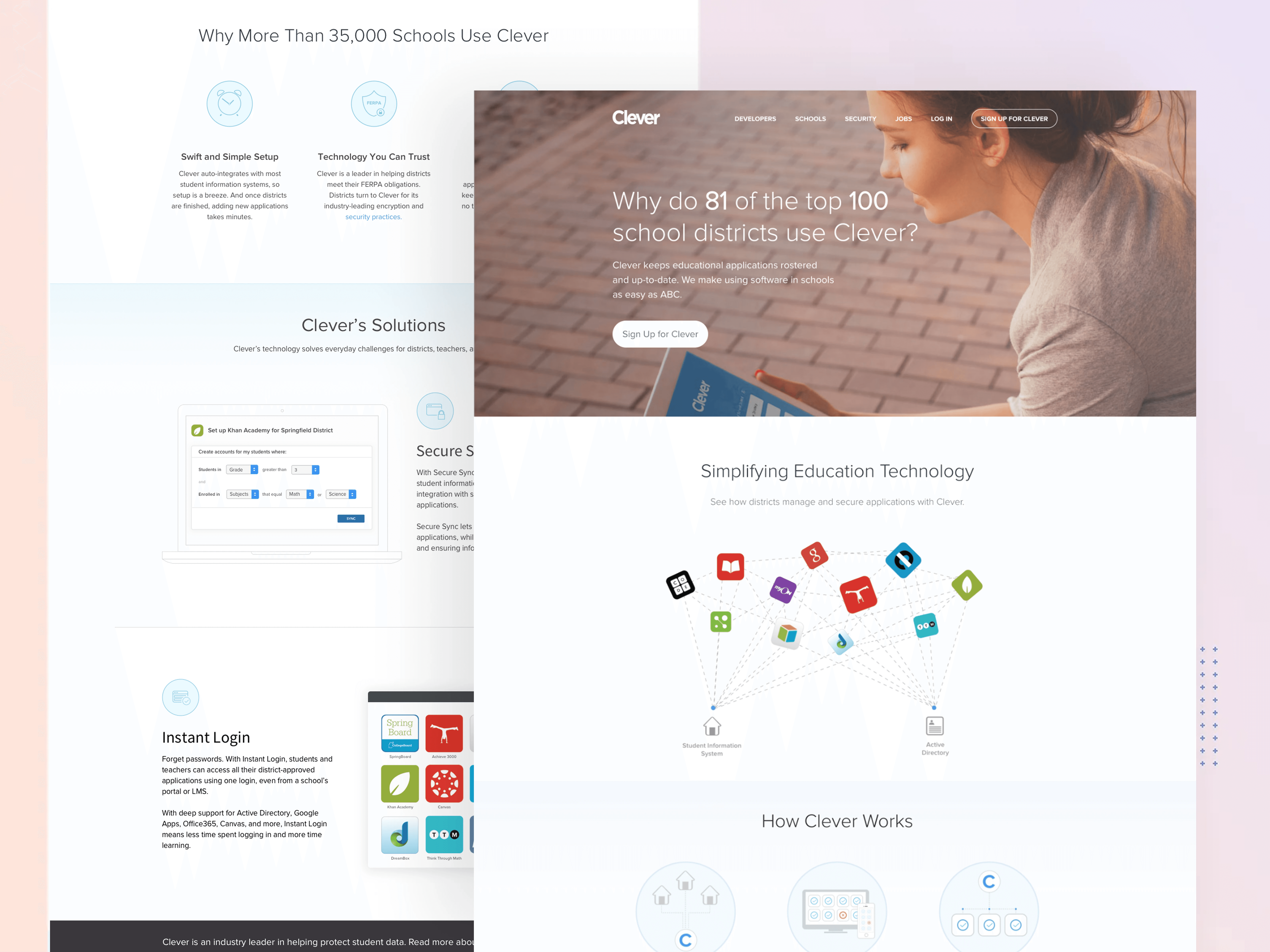
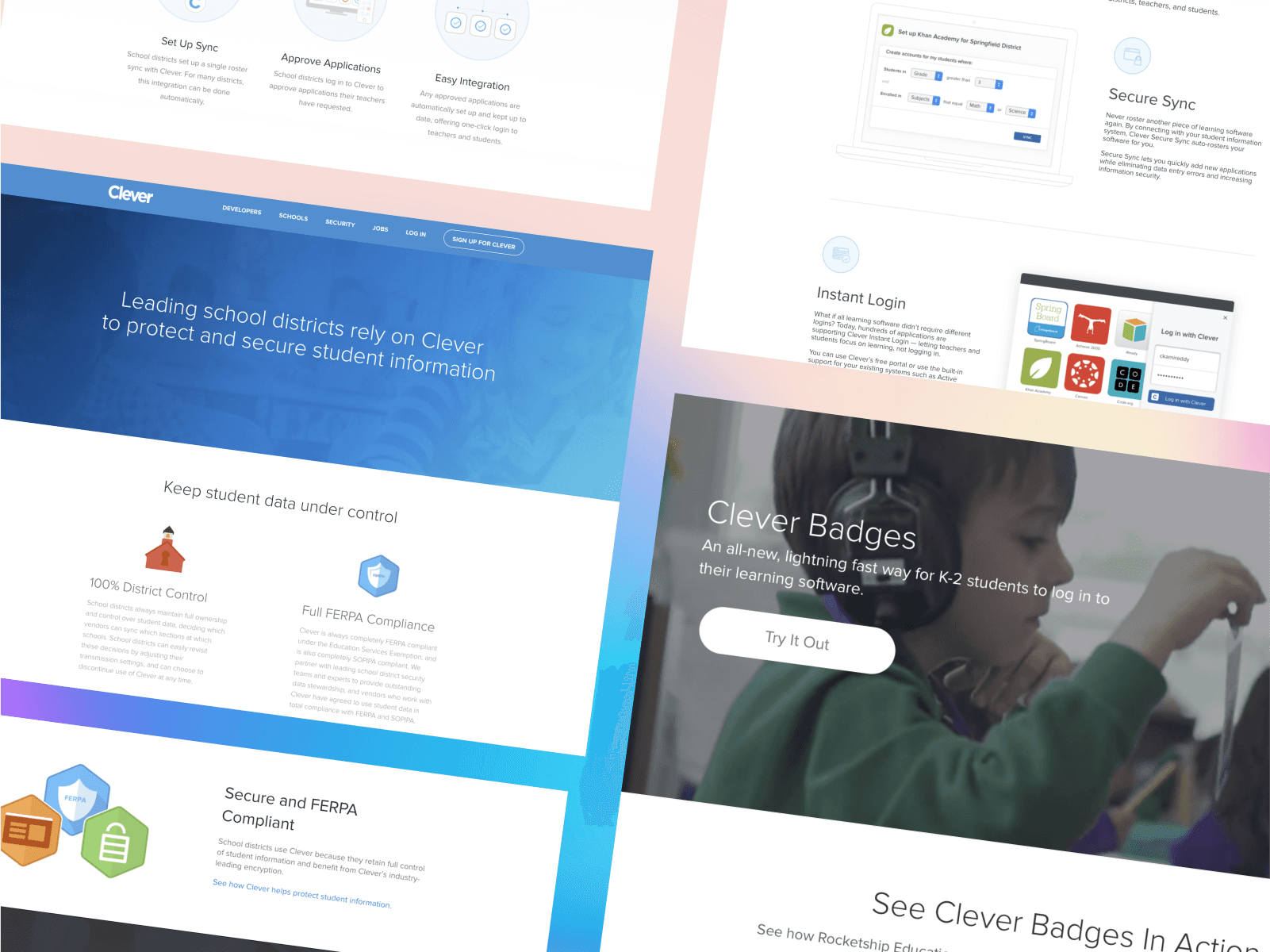
Modular page system across solutions
Trust & security as first-class content
Brand system applied across pages
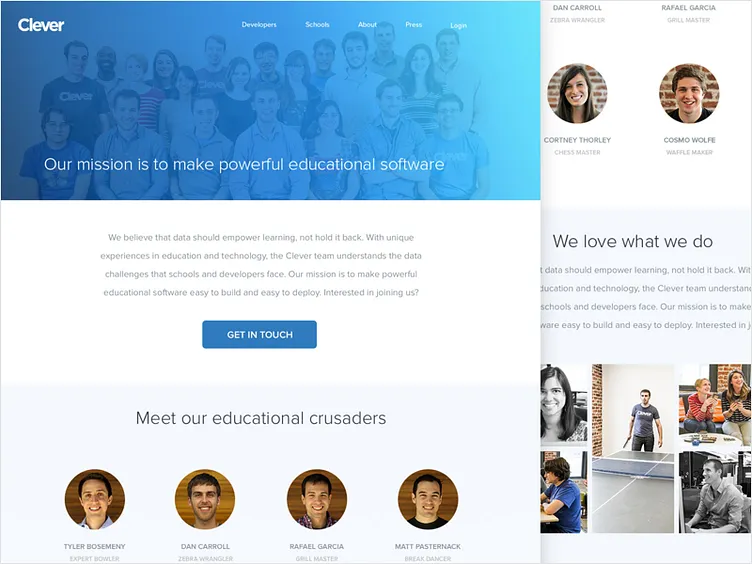
Early team + mission narrative (credibility + tone)
Judgment call: optimize for clarity and trust over feature completeness
A recurring tension was pressure to “say everything” on every page (every integration, every edge case, every product detail).
The decision: keep pages constrained to a small set of predictable modules and a clear narrative—then route deeper detail to the right destinations (docs, help content, product-specific pages).
Why this mattered:
District buyers needed fast comprehension and confidence
A modular system reduced drift and made updates safer and faster
Trust/security content stayed consistent and prominent, rather than being buried under feature lists
Outcomes
A consistent public narrative that matched how districts evaluate risk, adoption, and rollout
A modular page system that made it easier to expand content without redesigning from scratch
Stronger continuity across solutions pages (security, sync, instant login, badges), improving comprehension and credibility
Key results (Clever — program-level outcomes)
25M+ users (students and teachers)
90K+ schools nationwide using Clever
50% of U.S. districts connected monthly
30% reduction in support tickets via self-service onboarding
60% faster login completion
Acquired by Kahoot! for $435M (2021)
These outcomes reflect system-level decisions that improved access, reliability, and adoption at scale. This case study focuses on the web identity layer that helped communicate trust, security, and platform value to district buyers.
What I’d want a reviewer to take away
I apply design systems thinking beyond product UI: into brand, web identity, and content structure.
I can complex platform value into a clear, scalable narrative.
I use judgment to constrain scope so systems stay coherent as they grow.