VintageBaseball.club

Designing LLM Publishing Infrastructure

Work Delivered:

Product Strategy
AI Workflow Architecture
Prompt Engineering
Voice System Design
Information Architecture
Notion Production Pipeline

VintageBaseball.club

Designing LLM Publishing Infrastructure

Work Delivered:

Product Strategy
AI Workflow Architecture
Prompt Engineering
Voice System Design
Information Architecture
Notion Production Pipeline

VintageBaseball.club

Designing LLM Publishing Infrastructure

Work Delivered:

Product Strategy
AI Workflow Architecture
Prompt Engineering
Voice System Design
Information Architecture
Notion Production Pipeline

Industry

Industry

Sports Media • Ecommerce • AI-Assisted Publishing

Sports Media • Ecommerce • AI-Assisted Publishing

Role

Role

Founder • Product Designer • AI Systems Architect

Founder • Product Designer • AI Systems Architect

Founded

Founded

2025

2012

Market

Market

Editorial publishing • Affiliate commerce • Content-led discovery

101-250

Key Markets

Key Markets

U.S. K–12 Districts

U.S. K–12 Districts

Platform

Platform

Responsive Web

Responsive Web

Tools

Claude, ChatGPT, Notion, Framer, JSON, CSV, Figma

Claude, ChatGPT, Notion, Framer, JSON, CSV, Figma

Highlights

  • Reduced production time by more than 90%

  • Produced complete 1,500-word articles in approximately 30 minutes

  • Built category-agnostic architecture that scales beyond baseball

  • Created structured JSON and CSV outputs for CMS publishing

  • Automated SEO metadata generation

  • Designed a repeatable editorial workflow for hundreds of future articles

Overview

VintageBaseball.club began as an exploration of how AI could support structured editorial production without sacrificing quality or consistency.

Rather than building another AI content site, I designed a publishing system where voice, structure, workflows, and data models were defined before any content was generated.

The result is a category-agnostic platform that combines long-form storytelling, structured commerce, and AI-assisted production into a scalable publishing system.
The Challenge

Most AI-generated content struggles with consistency, structure, and editorial quality.

Most affiliate sites optimize for products instead of storytelling.

The challenge was designing a system that could:

  • Produce consistent long-form editorial content

  • Maintain a controlled voice across hundreds of articles

  • Connect historical narratives with product recommendations

  • Reduce production effort without sacrificing quality

  • Support structured publishing inside a CMS

  • Scale beyond baseball into additional product categories

My Role

I designed the product architecture, AI workflow, editorial system, and publishing infrastructure.

Responsibilities included:

  • AI workflow architecture

  • Voice system design

  • Information architecture

  • Content modeling

  • CMS architecture

  • Notion production system

  • Framer implementation

  • Prompt engineering

  • Structured output design

  • SEO automation

Approach

I approached the project the same way I approach design systems.

Instead of asking an LLM to write better content, I first designed the system the model would operate inside.

Voice System

I created structured JSON files defining:

  • Tone and pacing

  • Sentence structure

  • Narrative constraints

  • Reference influences

  • Editorial boundaries

The objective wasn’t imitation.

It was creating explicit rules that produced predictable, repeatable outputs.

{
"tagline": "Where the seams tell stories.",
"voiceTonePillars": [
{
"pillar": "Nostalgic",
"description": "Like listening to a game on the radio with your dad, evoke the smell of leather, the sound of cleats on concrete."
},
{
"pillar": "Reverent",
"description": "Speak about the game and its gear like sacred artifacts, not trends. The past is not 'old', it's earned."
},
{
"pillar": "Measured",
"description": "Pacing is calm, assured, like Vin Scully letting silence carry the weight."
},
{
"pillar": "Smart + Specific",
"description": "Mix cultural literacy with stat-savvy depth, Moneyball meets Roger Angell."
},
{
"pillar": "Poetic, Not Purple",
"description": "Use metaphor and lyricism without drifting into fluff, grounded elegance."
},
{
"pillar": "Editorial + Emotional",
"description": "Each product is a story, a ritual, a piece of someone's memory, not just merch."
}
],
"sentenceLevelGuidelines": [
{
"guideline": "Short sentences = impact",
"example": "This isn't a cap. It's a second-inning souvenir."
}

Content Architecture

Before generating a single article, I designed a repeatable editorial structure that separated narrative storytelling from historical research while defining where products, metadata, and supporting content belonged.

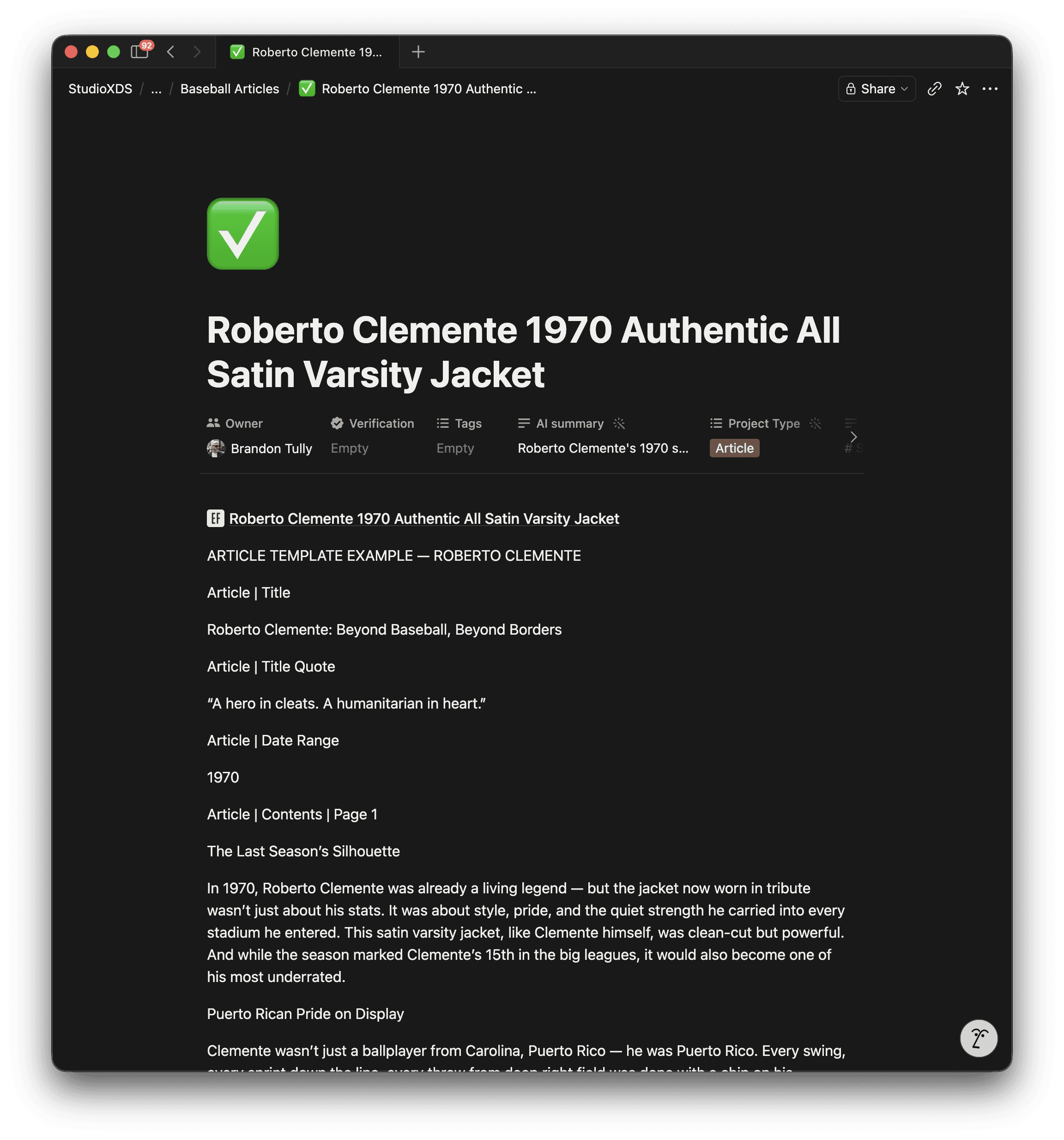
{
"article": {
"title": "The Black Yankees: New York's Forgotten Champions",
"title_quote": "Not just a team. A testimony.",
"date_range": "1932–1948",
"contents": {
"page_1": {
"The Other Yankees": "The New York Black Yankees weren’t just a baseball team. They were a testament to resilience, talent, and the unbreakable spirit of Black ballplayers in pre-integration America. Originally formed as the Harlem Stars in 1932, they barnstormed across the Northeast, often playing doubleheaders in different states—sometimes on the same day.",
"Barnstorm to Big Time": "By 1936, they joined the Negro National League and adopted the Black Yankees name, a badge of pride and pressure in equal measure. Though often overshadowed by their white counterparts in the Bronx, the Black Yankees played at Yankee Stadium when the big league Yankees were on the road. In a time of segregation, this was as symbolic as it was historic.",
"On-the-Road Legends": "Without a permanent home base, the Black Yankees became legends of the road. From Paterson, NJ to Rochester, NY, they brought their game—and their story—to communities who rarely saw such talent on their fields. They weren’t just athletes. They were ambassadors of what the game could be."
},
"page_1_mini_quote": "Doubleheaders in different states—sometimes on the same day.",
"page_2": {
"A Team That Deserved More": "Though the Black Yankees never won a Negro League pennant, their value can’t be measured in trophies. Their roster included stars like James \"Red\" Moore and George Crowe, who would go on to break color lines in pro basketball and Major League Baseball. They were underfunded, underpromoted, and often outmatched by better-financed teams—but they never stopped playing.",
"The Legacy Lives On": "Today, their memory is preserved in places like the Negro Leagues Baseball Museum in Kansas City, and now, through garments like the NY Black Yankees Satin Varsity Jacket. A portion of proceeds from this piece supports the NLBM.\n\nThis isn’t just satin. It’s storytelling in thread.",
"Cultural Weight": "The Black Yankees carried more than gloves and cleats when they hit the road. They carried dignity, despite being ignored by newspapers and denied hotel rooms. Every game was an act of protest against a system that tried to erase their excellence. And still, they showed up—sharp, fast, professional. This jacket honors that commitment to self-definition in the face of erasure.",
"What This Jacket Represents": "It isn’t just a replica. It’s a reminder. A reminder of who played when no one watched. A tribute to a team that made the game better—without being welcomed into the league that claimed to represent it."
}
},
"image_description": "The varsity jacket features felt \"NY\" lettering on the chest and \"Black Yankees\" across the back—honoring the traveling spirit of a team that carried more than their gear from town to town.",
"headline_quote": "They played at Yankee Stadium, but history played keep-away.",
"product_details": [
"Satin body and sleeves",
"Felt \"NY\" on chest, \"Black Yankees\" on back",
"Quilted lining with polyester fill",
"Snap-front buttons",
"Soft ribbed collar, cuffs, and hem",
"Inner left chest pocket",
"Official partnership with the Negro Leagues Baseball Museum",
"Body/Lining: 100% polyester",
"Made in China",
"Dry clean only"
]
},

Publishing Infrastructure

I built a production pipeline spanning Notion and Framer that managed:

  • Research

  • Draft generation

  • Product mapping

  • Metadata

  • SEO

  • CMS publishing

  • Structured exports

Everything was modeled so the workflow could operate consistently at scale.

AI-Assisted Workflow

LLMs became one component inside the system rather than the system itself.

The workflow handled research synthesis, structured draft generation, metadata creation, and CMS-ready outputs, while editorial direction, quality control, and final decisions remained human.

Results

  • Reduced article production time by more than 90%

  • Produced complete 1,500-word articles in approximately 30 minutes

  • Built a reusable voice system using structured JSON rules

  • Created a category-agnostic publishing architecture that scales beyond baseball

  • Automated metadata generation and structured CMS publishing

  • Established a repeatable editorial workflow supporting hundreds of future articles

Key Takeaways

This project reinforced my approach to AI product design.

The value wasn’t generated by the language model itself.

It came from designing the system around it.

Voice, interaction rules, structured data, workflow architecture, and production pipelines determined the quality of the outcome.

AI accelerated execution, but the product depended on well-defined constraints, information architecture, and human judgment.

VintageBaseball.club demonstrates how I approach AI-enabled products: build the system first, define the rules, then let automation handle the repeatable work while people remain responsible for direction, quality, and decision-making.

Related Case Studies

Reducing onboarding friction by restructuring how users reach first value.

Workflow Architecture
Usability Validation
Onboarding
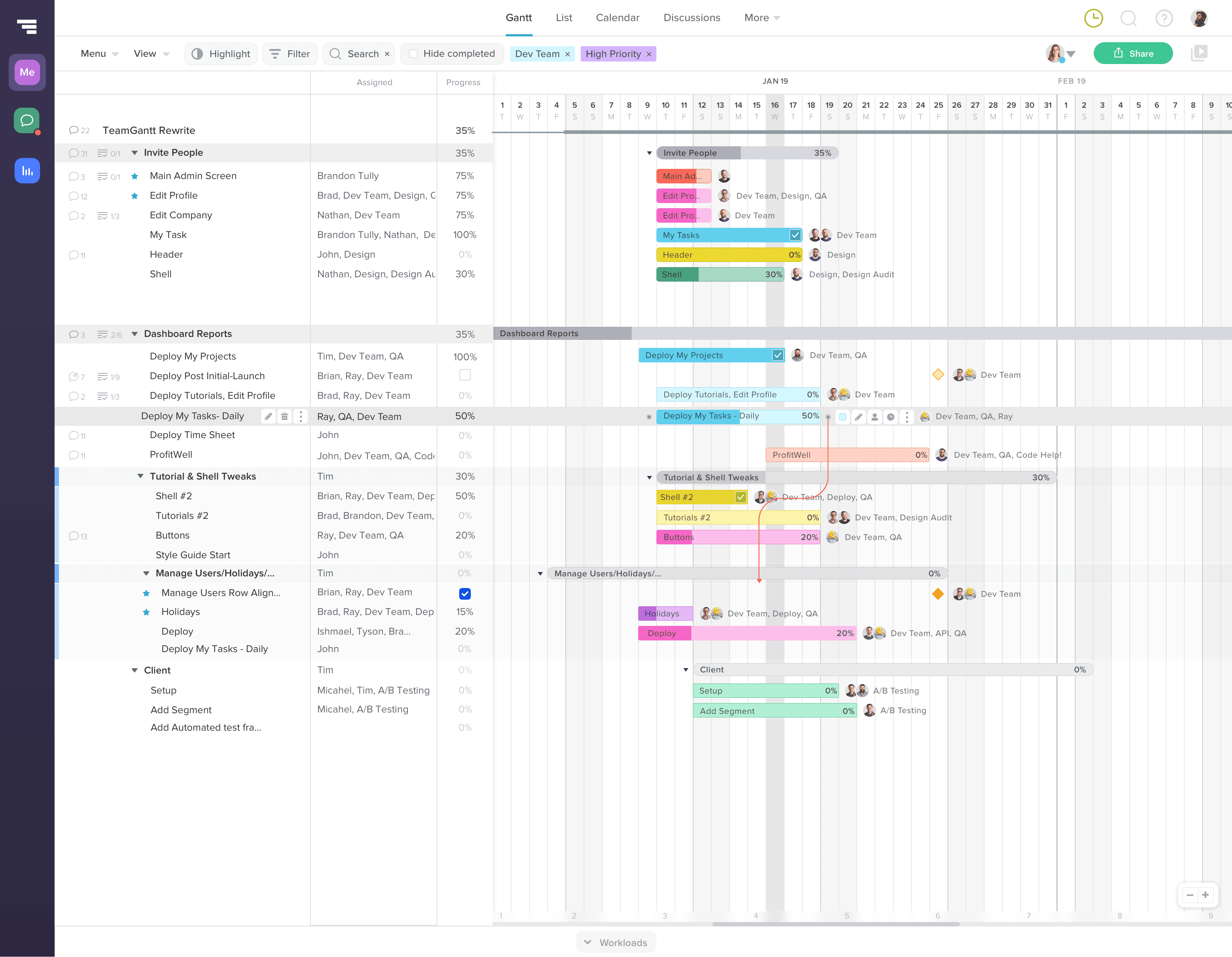
Making dependency behavior predictable in a visual planning system.

Workflow Clarity
Research & Validation
Dependencies
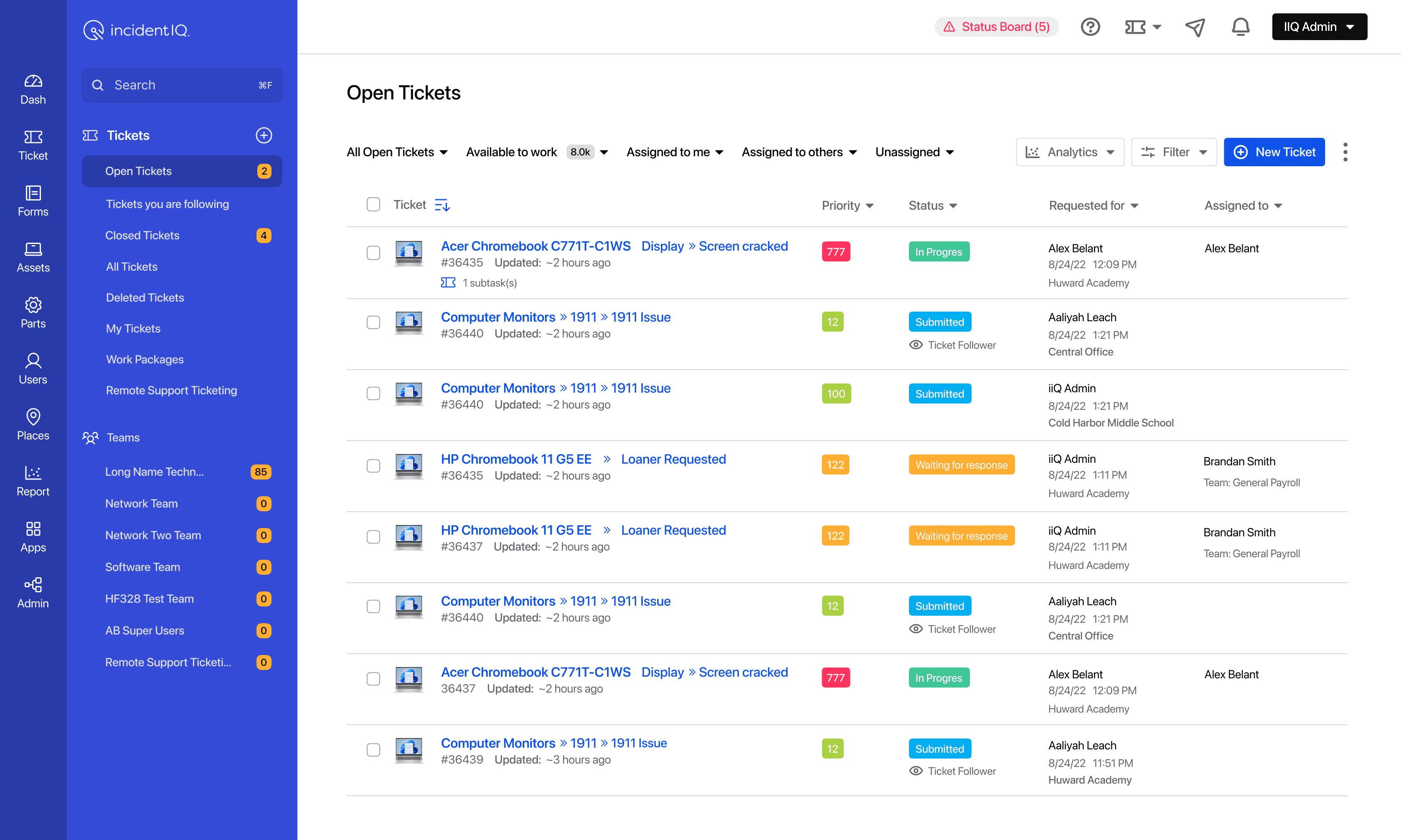
An alignment and scalability challenge disguised as a table component.

Design Systems
System Architecture
Scale & Reuse

Aligning design, engineering, accessibility, and delivery across six SaaS modules.

Design Systems
UX Strategy
DesignOps
Accessibility

Scaling a product with limited design resources by building systems, not screens.

Design Systems
Workflow Architecture

Lowering early drop off by restructuring how users reach first value.

Onboarding Redesign
Workflow Simplification
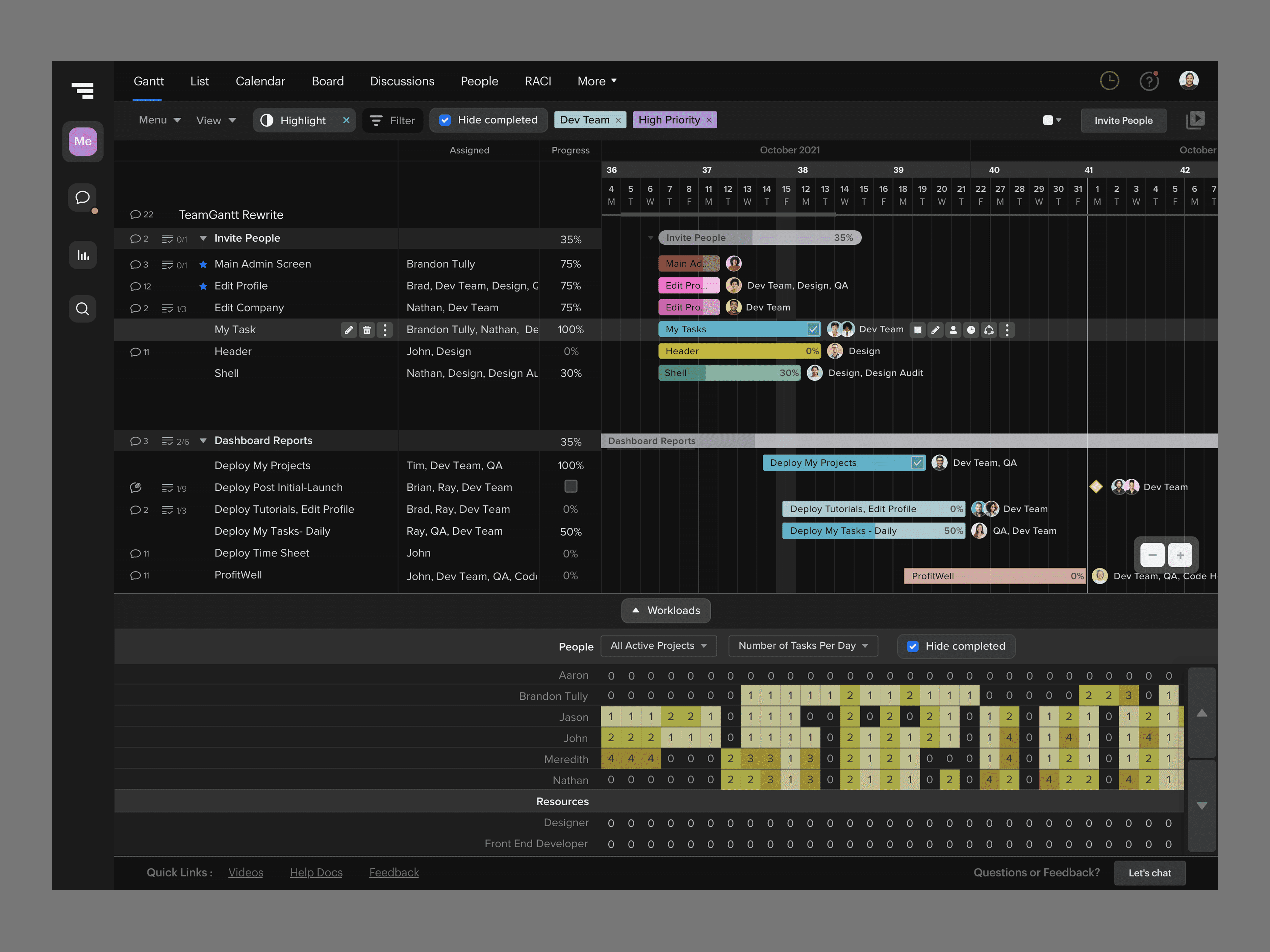
Keep the product focused on the planning model, not expanding features.

Roadmap Prioritization
Product Strategy
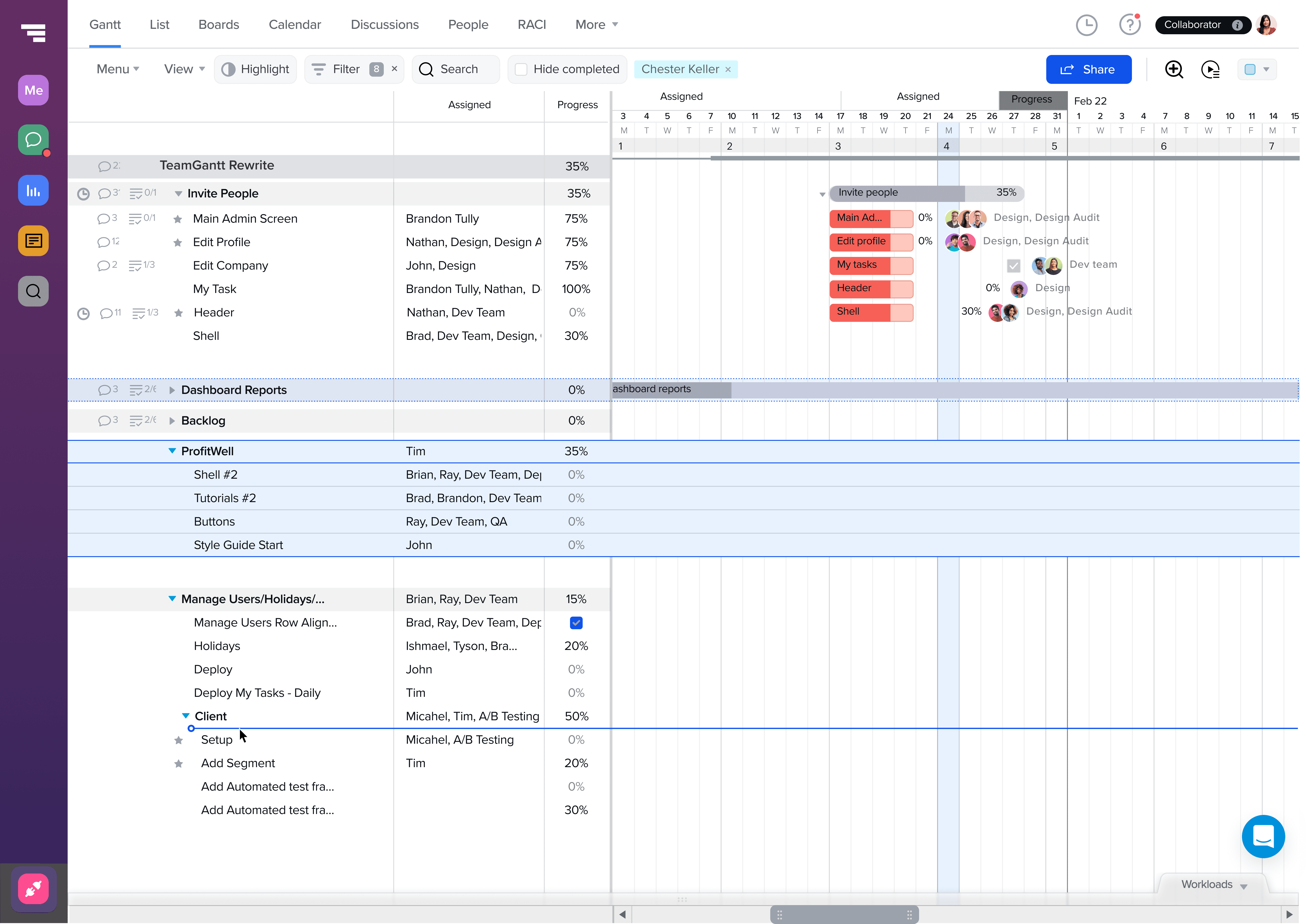
Making product decisions that preserve control and predictability.

Product Judgment
Roadmap Influence

Designing scheduling behavior that feels powerful without becoming unpredictable.

UX Tradeoff Decisions
Visual Feedback Design
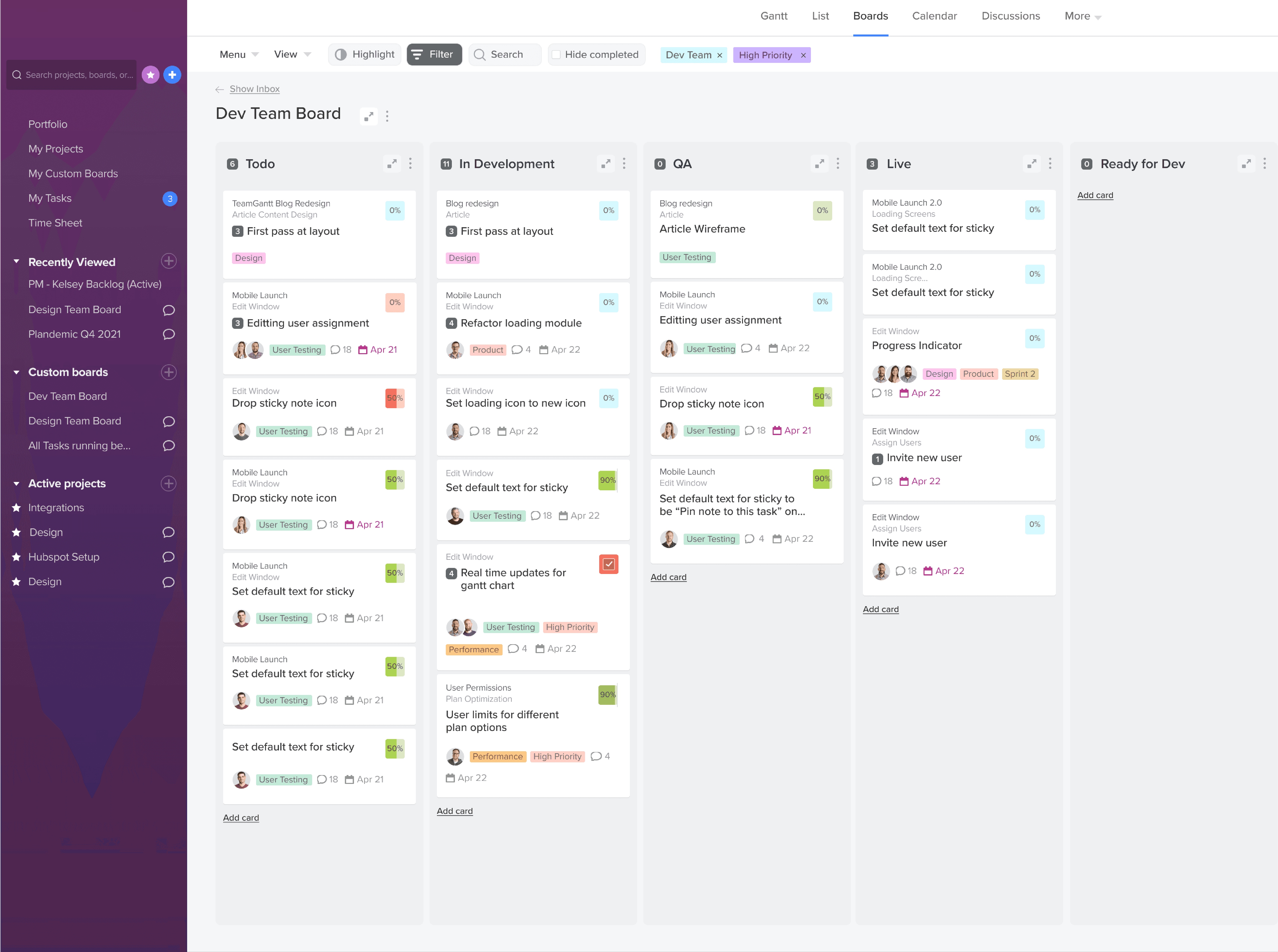
Using direct observation to guide product decisions when analytics are incomplete.

Workflow Analysis
Customer Insight Synthesis
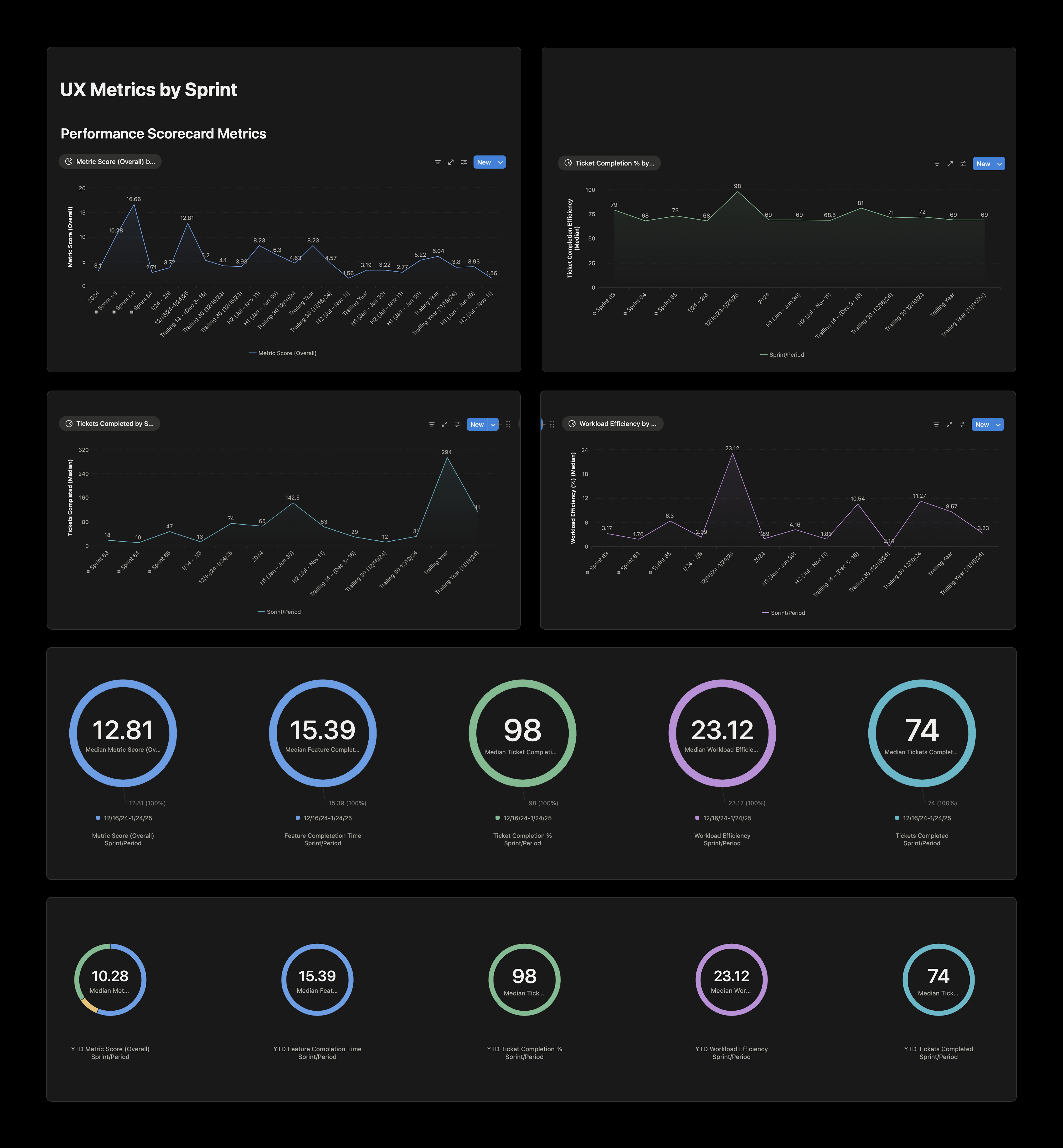
Turning design from a service into a system tied to delivery outcomes.

Metrics Architecture
DesignOps
System Design
a computer screen with a bar chart on it

Turning design into a decision driver by making its impact visible.

Product Alignment
Metrics Strategy
Executive Communication
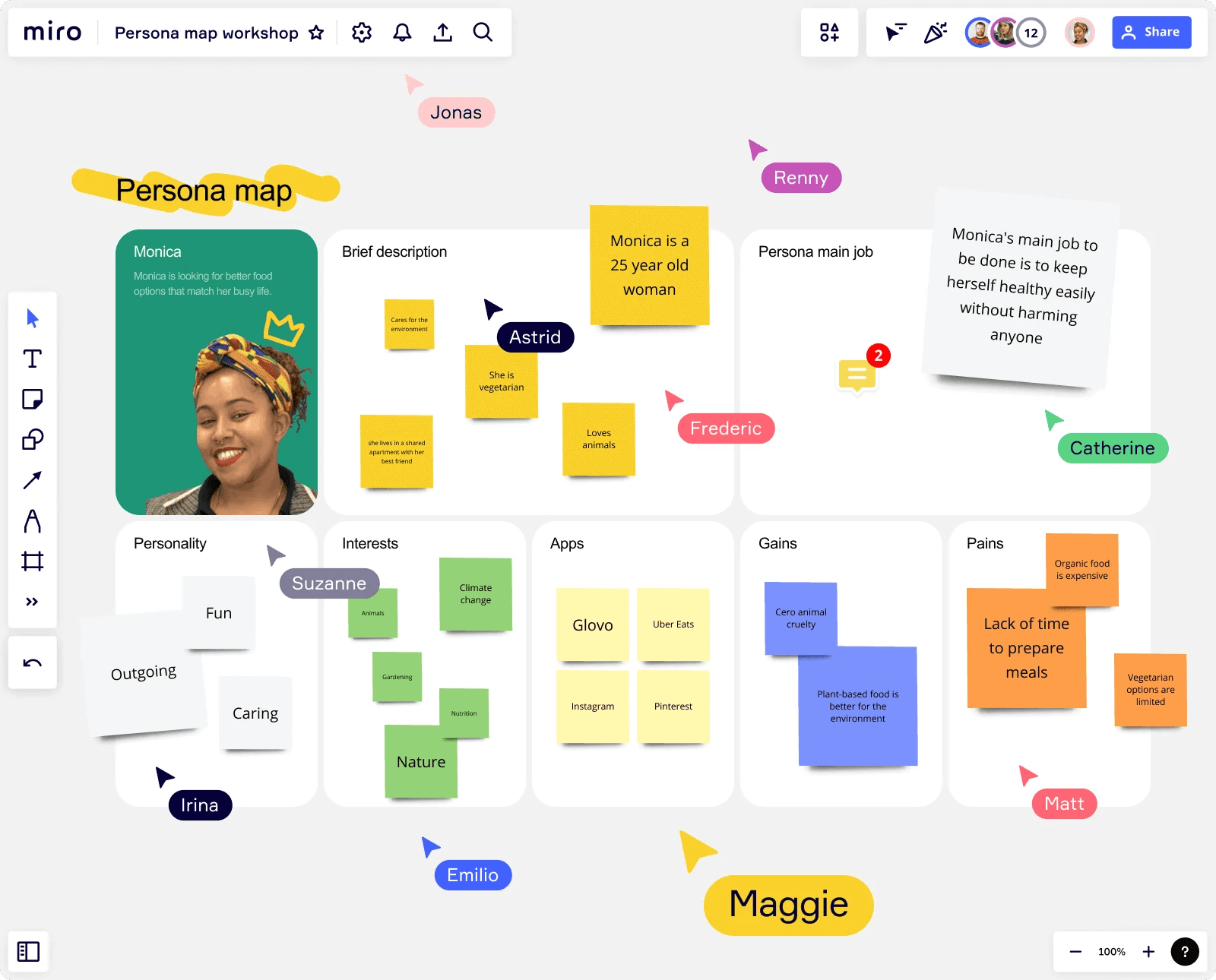
black flat screen computer monitor

Turning fragmented research into a system that guides product decisions.

Persona System Design
Research Synthesis
UX Strategy

Simplified K–12 identity friction and access to first value.

K–12 Access
ID Management
Identity & Auth
black flat screen computer monitor

Building the public product experience behind a platform used by 25 million students.

Web Identity
UX Systems
Design System Thinking

AI-Assisted Publishing System & LLM Workflow Architecture

AI Workflow Architecture
Prompt Engineering
Information Architecture

A better system makes everyone’s day less stupid. Clarity pays for itself.