Highlights
Founding UX lead
Onboarding friction reduced 30%
Retention increased 15%
Customer lifetime value increased 10%
Reusable product and design foundations established during the Captain401 stage
Experience system supported the company’s early growth before the Human Interest rebrand
Overview
Human Interest began as Captain401, a Y Combinator startup focused on making retirement plans practical for small and midsize businesses.
At the time, offering a 401(k) required paperwork, payroll coordination, compliance review, employee enrollment, and ongoing plan administration. Larger companies could absorb that work through internal HR and finance teams. Smaller businesses often could not.
Captain401 approached that administrative burden as a software problem.
I joined during the company’s earliest stage as the founding UX lead. The product model, visual language, onboarding experience, and design foundation were still taking shape.
Working directly with founders Roger Lee and Paul Sawaya and the early engineering team, I defined the foundation across plan setup, payroll, compliance, automation, reusable interaction patterns, public product communication, and engineering delivery.
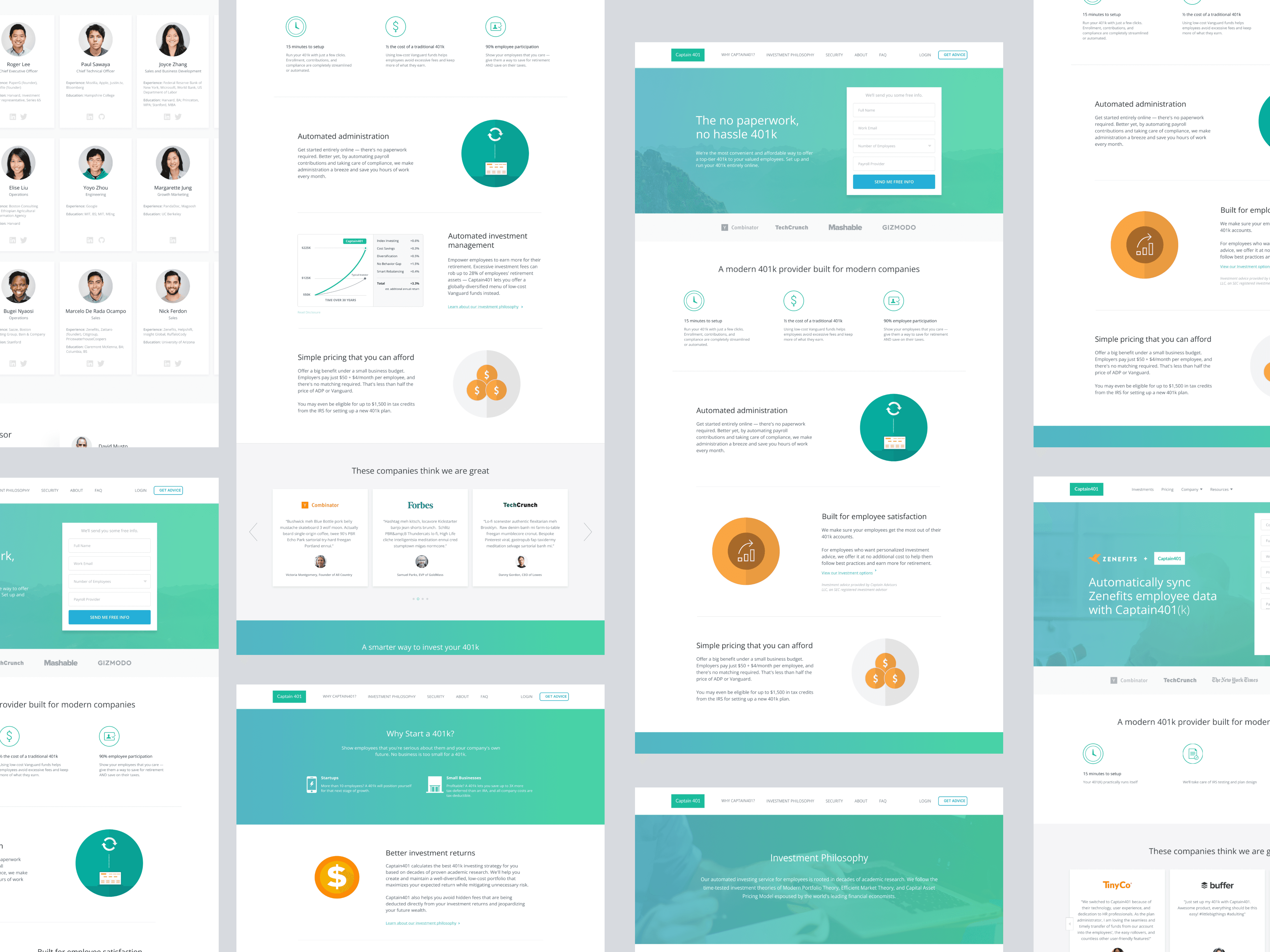
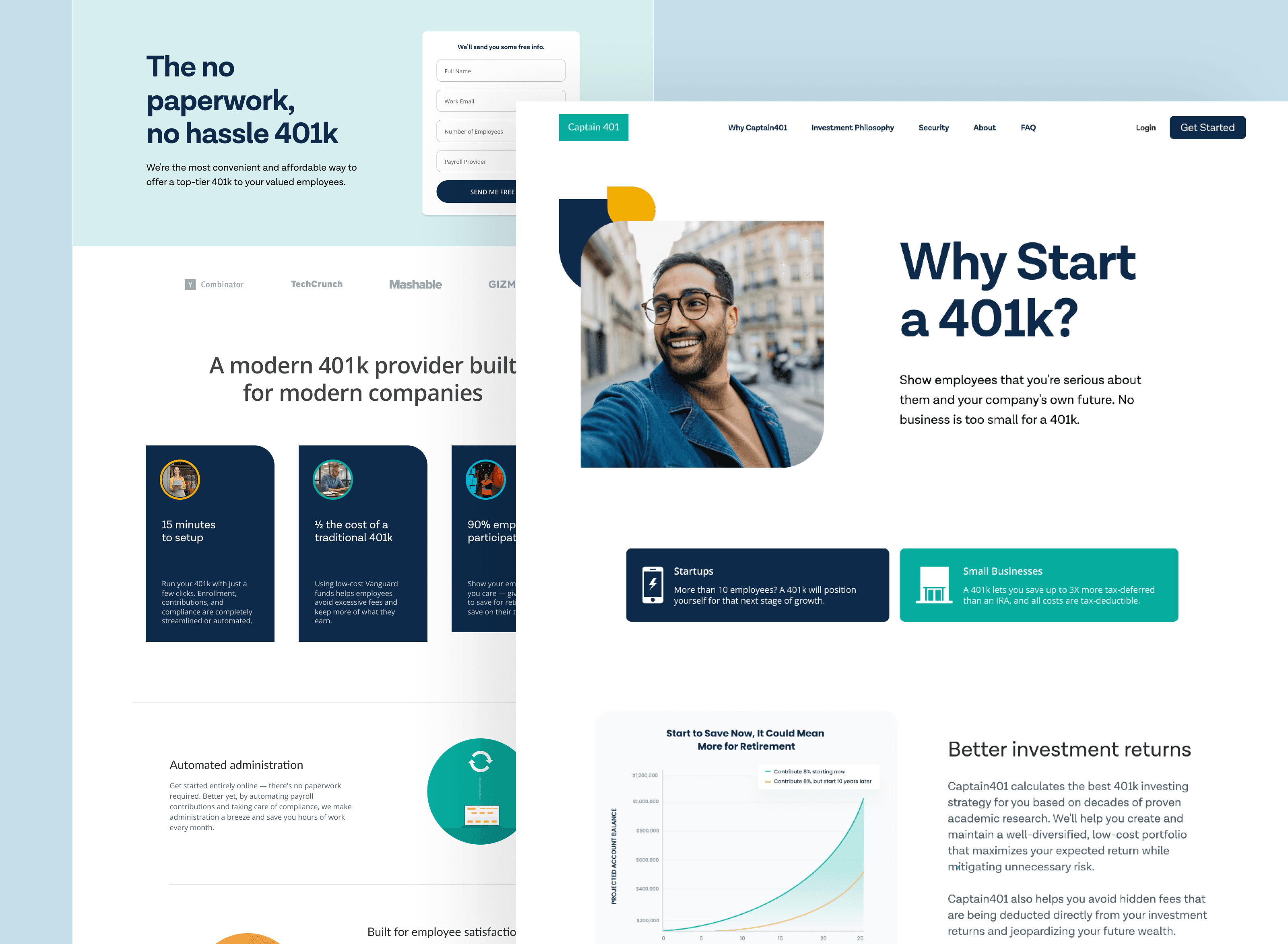
The work established a consistent product and brand system during the Captain401 stage. Those foundations supported early growth and provided continuity as the company later became Human Interest.
The administrative problem
A retirement plan connects several systems that small businesses rarely experience as one product.
The employer defines the plan. Payroll determines how contributions move. Employees decide whether and how much to contribute. Compliance governs eligibility, reporting, verification, and ongoing administration.
Traditional providers divided that work across forms, service teams, payroll systems, investment materials, and manual follow-up. The complexity remained visible to the customer.
Captain401 needed to create one understandable path through that work.
Foundation
The experience was organized around customer progress rather than the sequence of internal operations.
Employers needed to understand what they were setting up, what information was required, and what would happen after each decision. The product could manage the remaining administrative logic behind the interface.
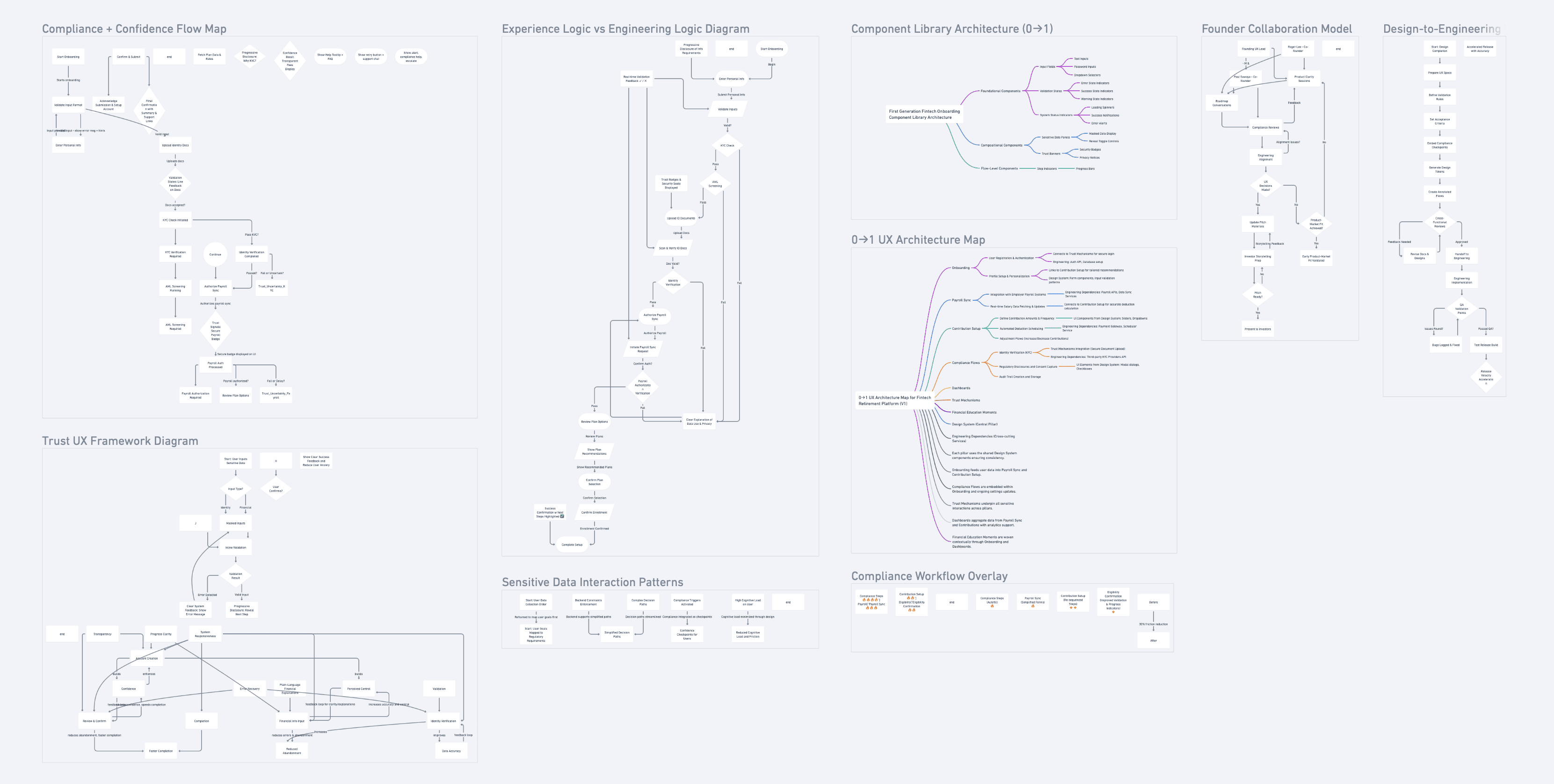
The foundation followed a consistent model.
This model connected onboarding, payroll, compliance, enrollment, and ongoing administration.
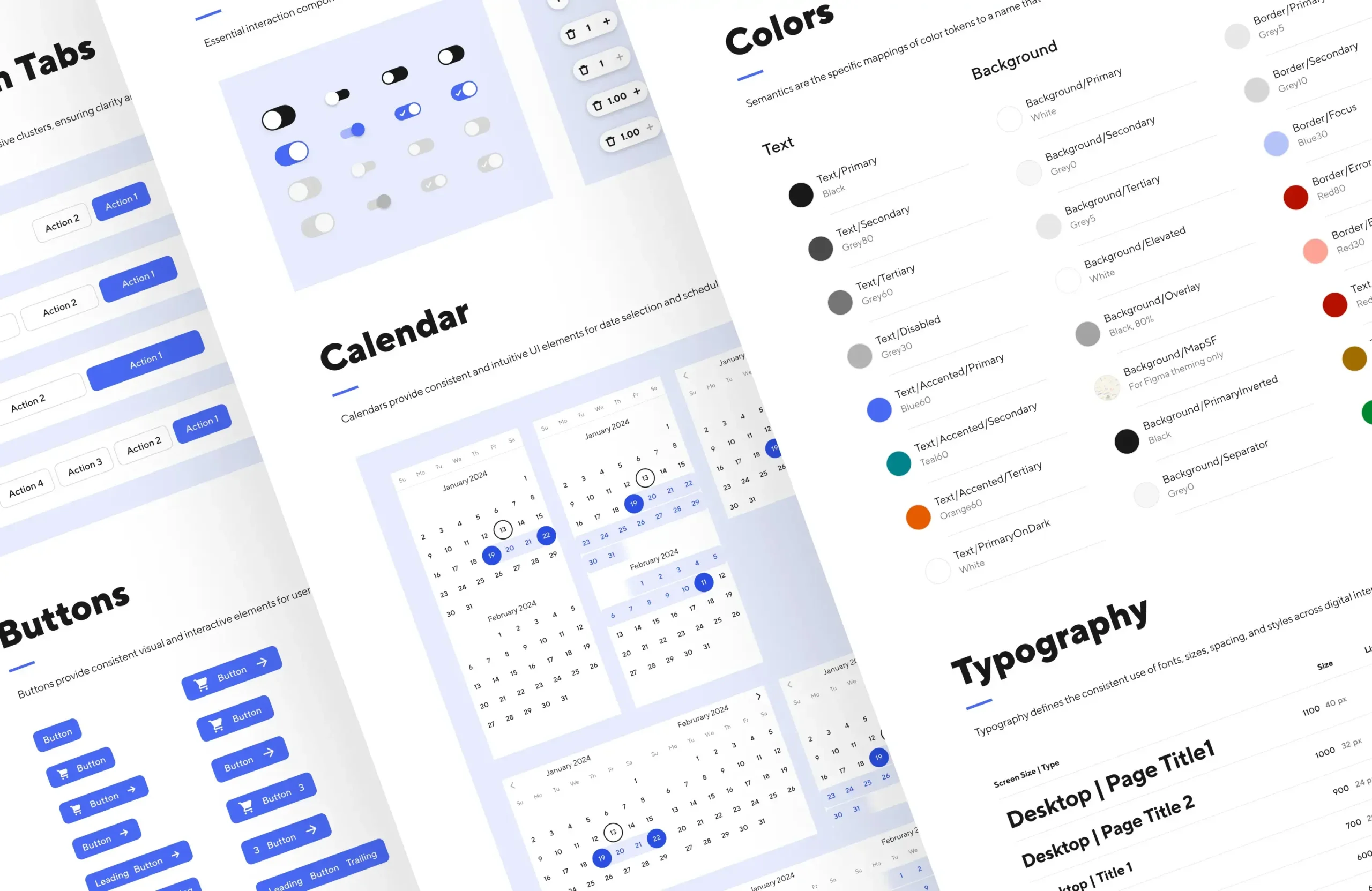
It also shaped the design system. Shared forms, validation states, status patterns, content structures, and navigation behaviors were created around recurring customer needs. The system developed with the product rather than being added afterward.
Plan setup
Most customers were establishing a retirement plan for the first time.
The product could not assume familiarity with contribution structures, eligibility rules, plan responsibilities, or implementation requirements. It needed to support informed decisions without turning onboarding into a course on retirement administration.
I reorganized plan setup around a guided sequence.
The experience separated three kinds of work.
Decisions the employer needed to make
Information the product could retrieve or reuse
Administrative work the platform could handle after setup
Customers moved through one structured process instead of a collection of financial forms.
That work reduced onboarding friction by one-third.
Payroll
Payroll was part of the product foundation.
Employee contributions depended on accurate payroll data. The platform needed to understand eligibility, compensation, deduction timing, and how contribution information moved between systems.
Different providers created different implementation paths. Exposing those differences directly would make the experience harder to understand and maintain.
I worked with the founders and engineering to translate payroll requirements into one guided model.
Customers focused on the work assigned to them.
Provider-specific logic stayed behind a consistent experience wherever possible.
Clear status, validation, and follow-up patterns helped customers understand what had happened and what still required attention.
Compliance and verification
Compliance appeared throughout the product because it governed the service itself.
Employers needed to verify business information, establish plan rules, confirm employee eligibility, and submit sensitive financial data before a plan could launch.
Those requirements needed context.
The product did not hide compliance. It kept compliance from becoming the structure customers had to navigate.
Shared patterns supported that consistency across sensitive data entry, required fields, error recovery, pending states, approval, and contextual guidance.
Automation and system feedback
Captain401 reduced ongoing administration through software and payroll connectivity.
That created a new requirement. Customers needed visibility into work they were no longer performing themselves.
As payroll synchronized, employee information changed, verification completed, and contributions processed, the product communicated the current state without exposing every internal operation.
Employee enrollment
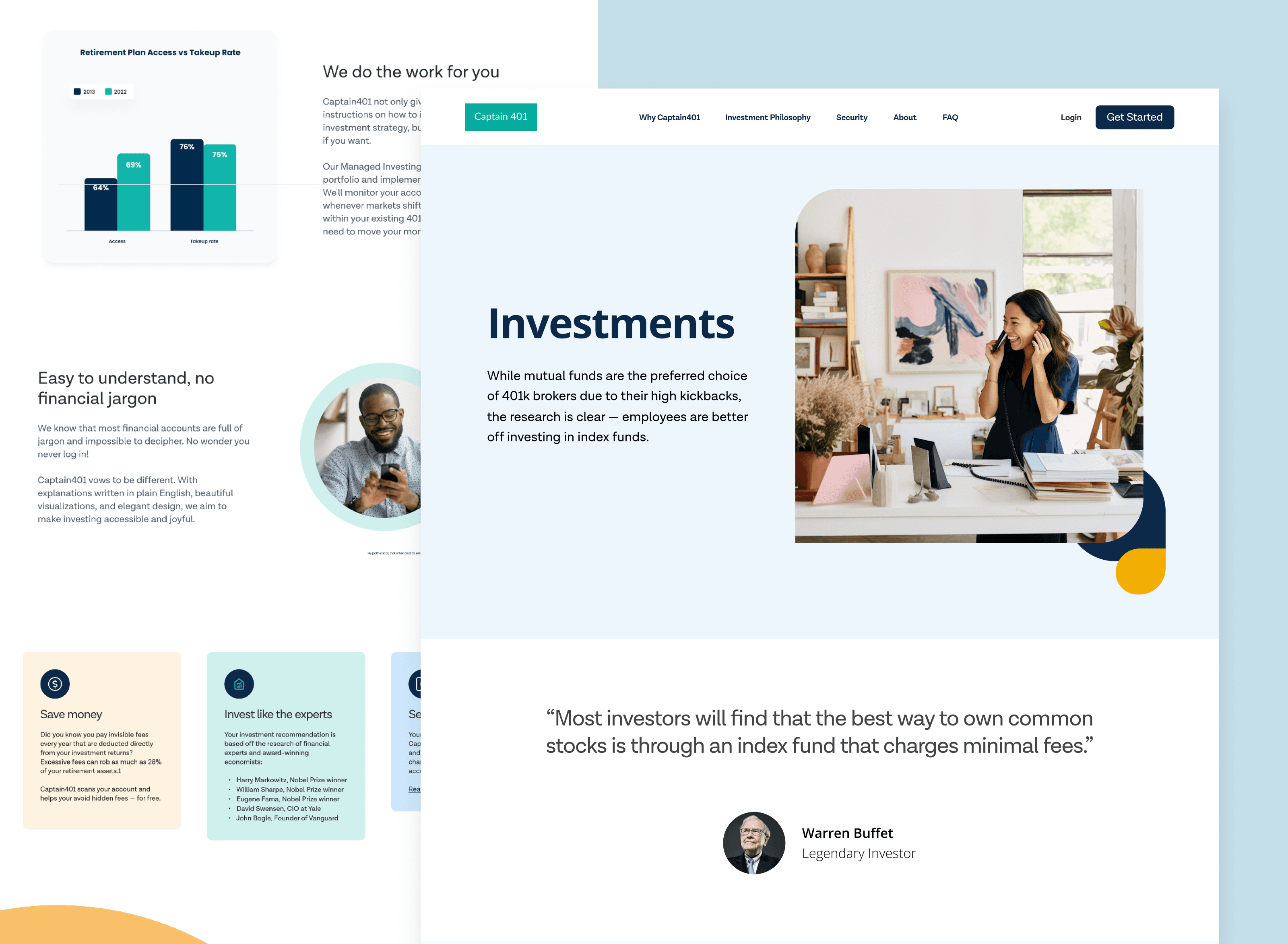
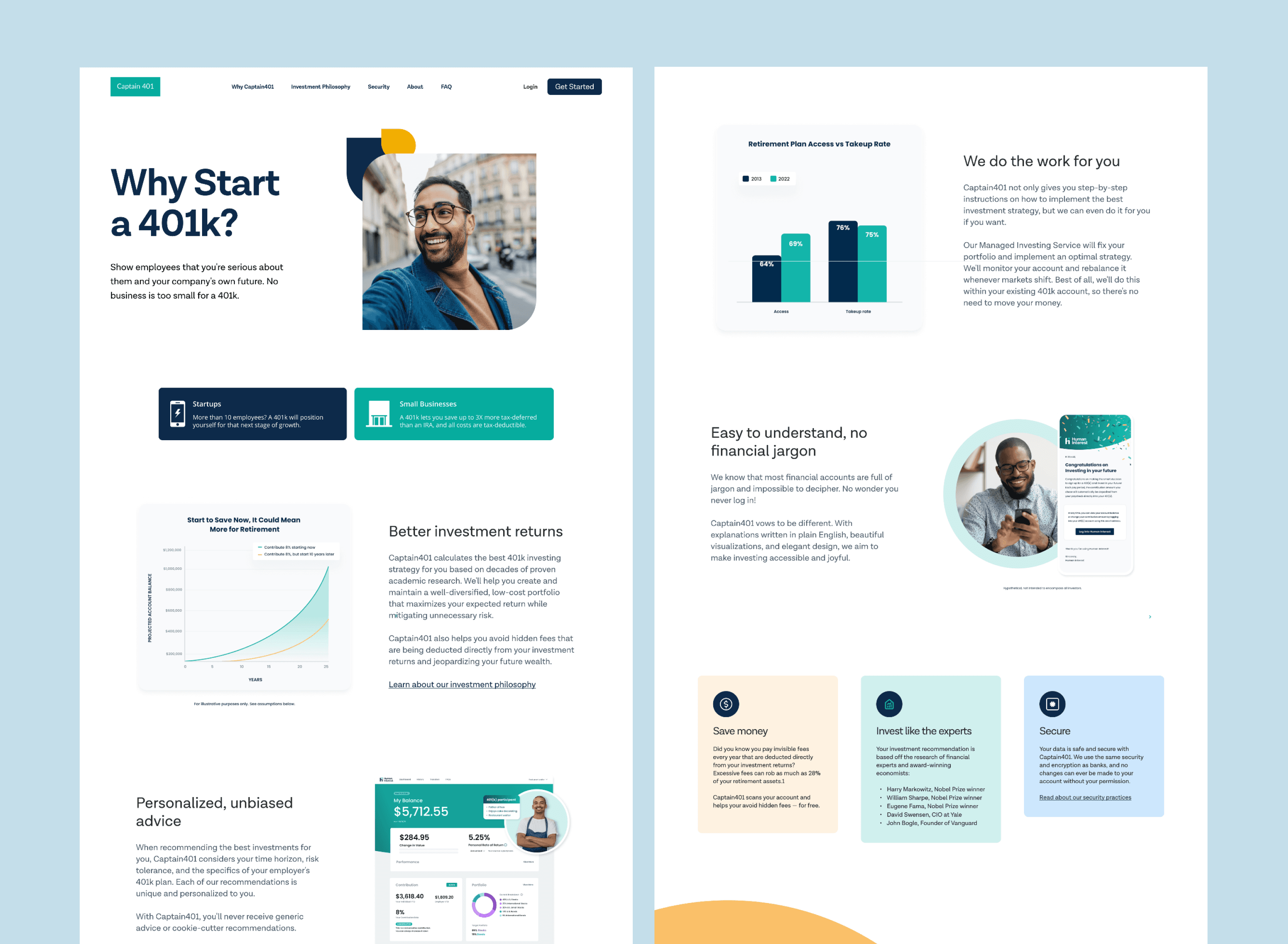
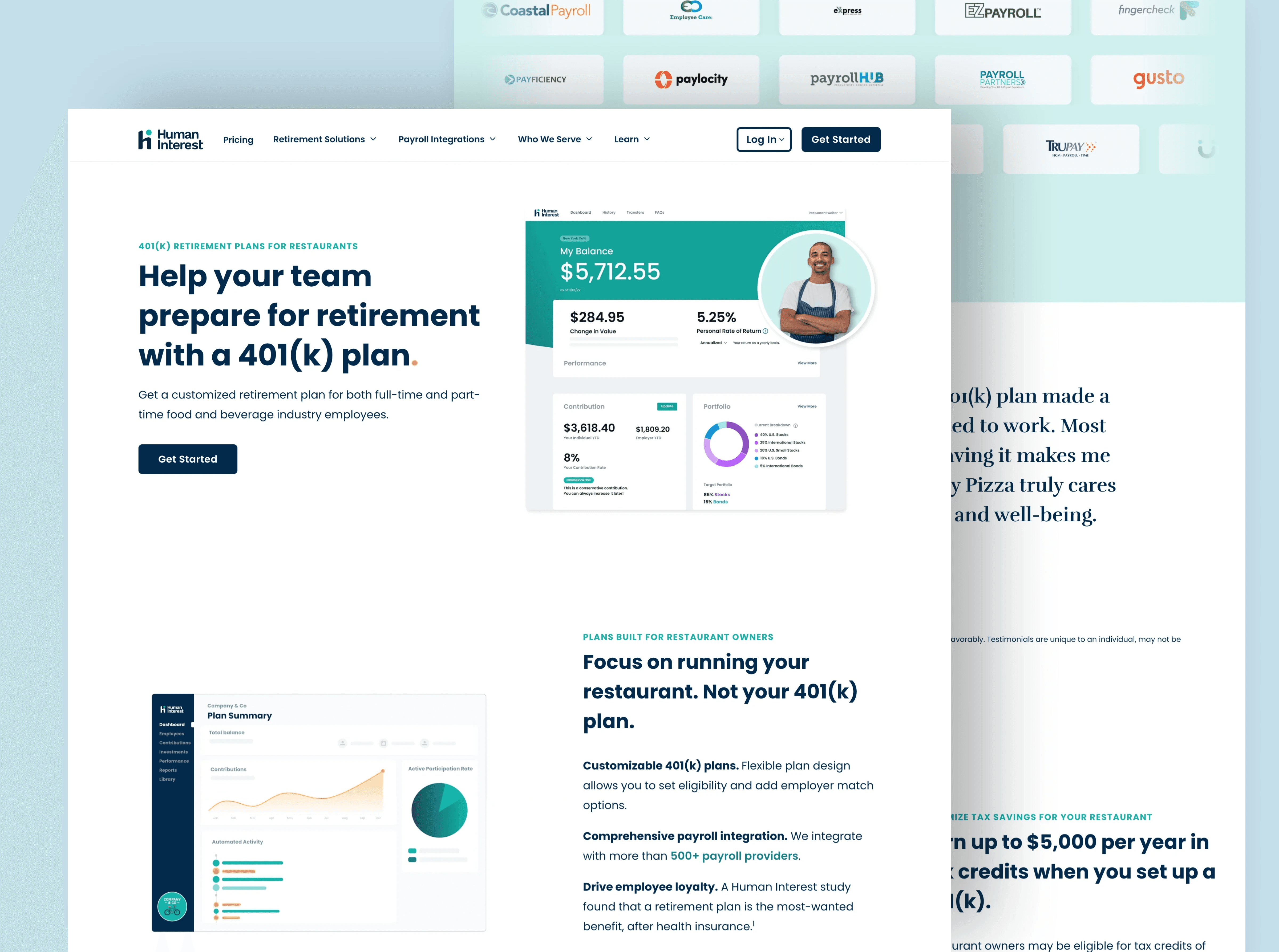
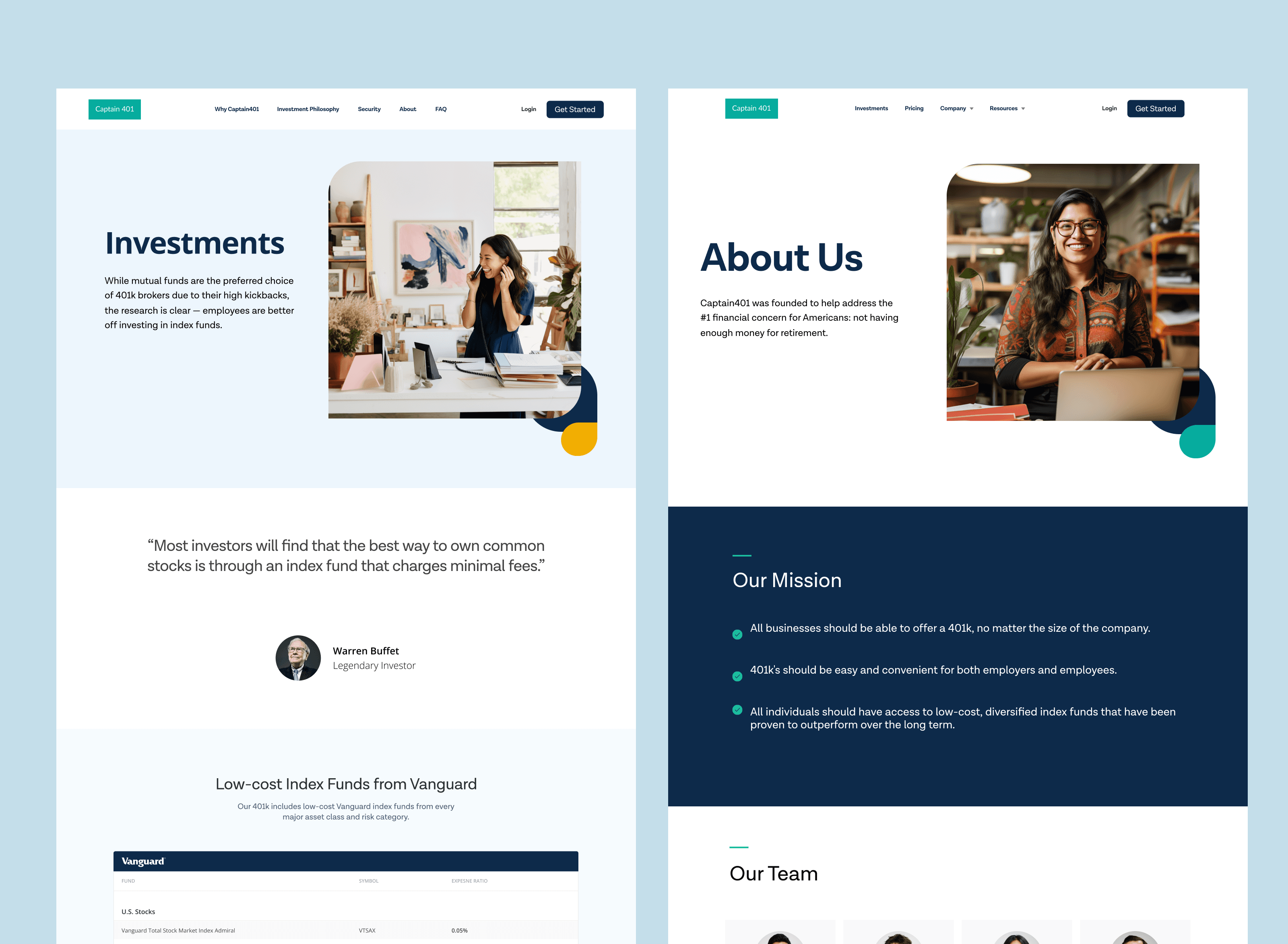
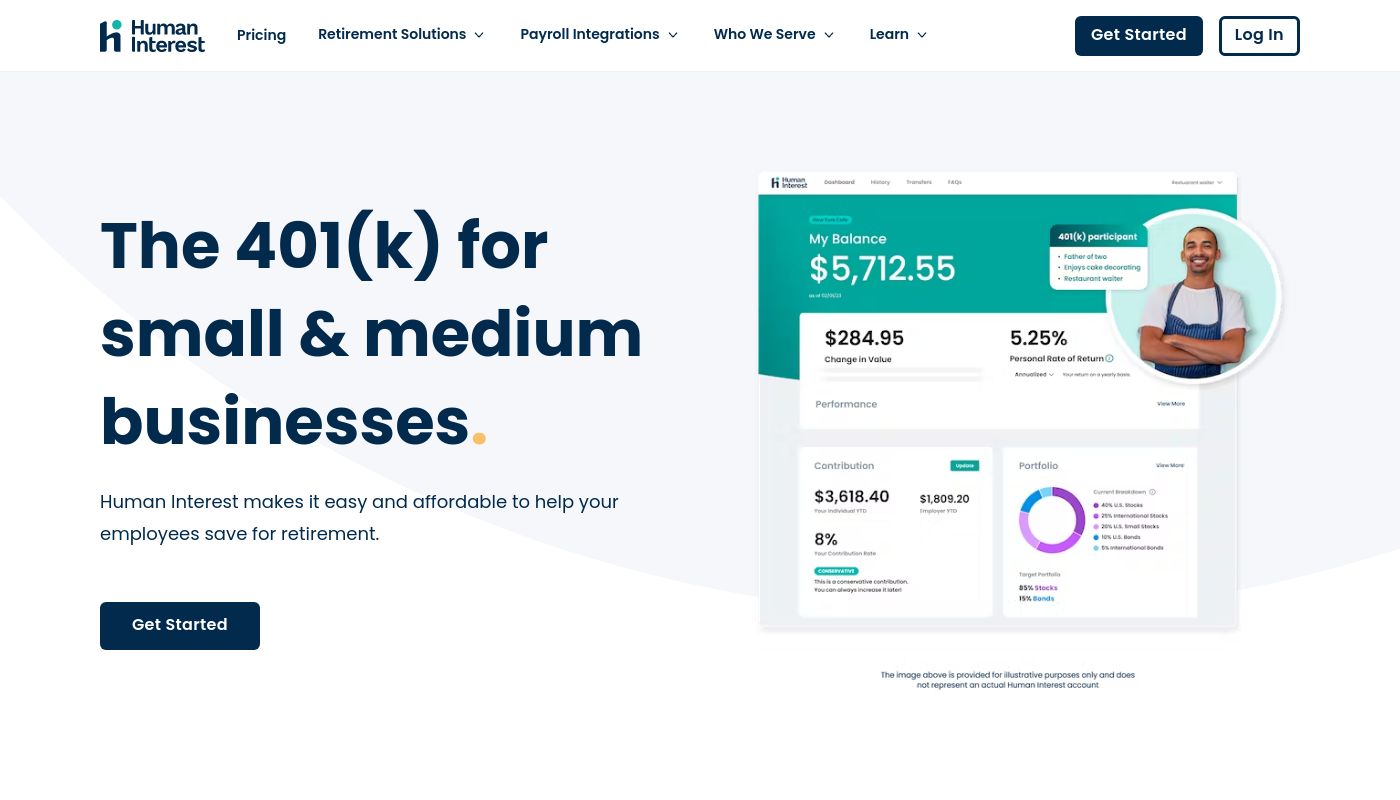
Product identity and communication
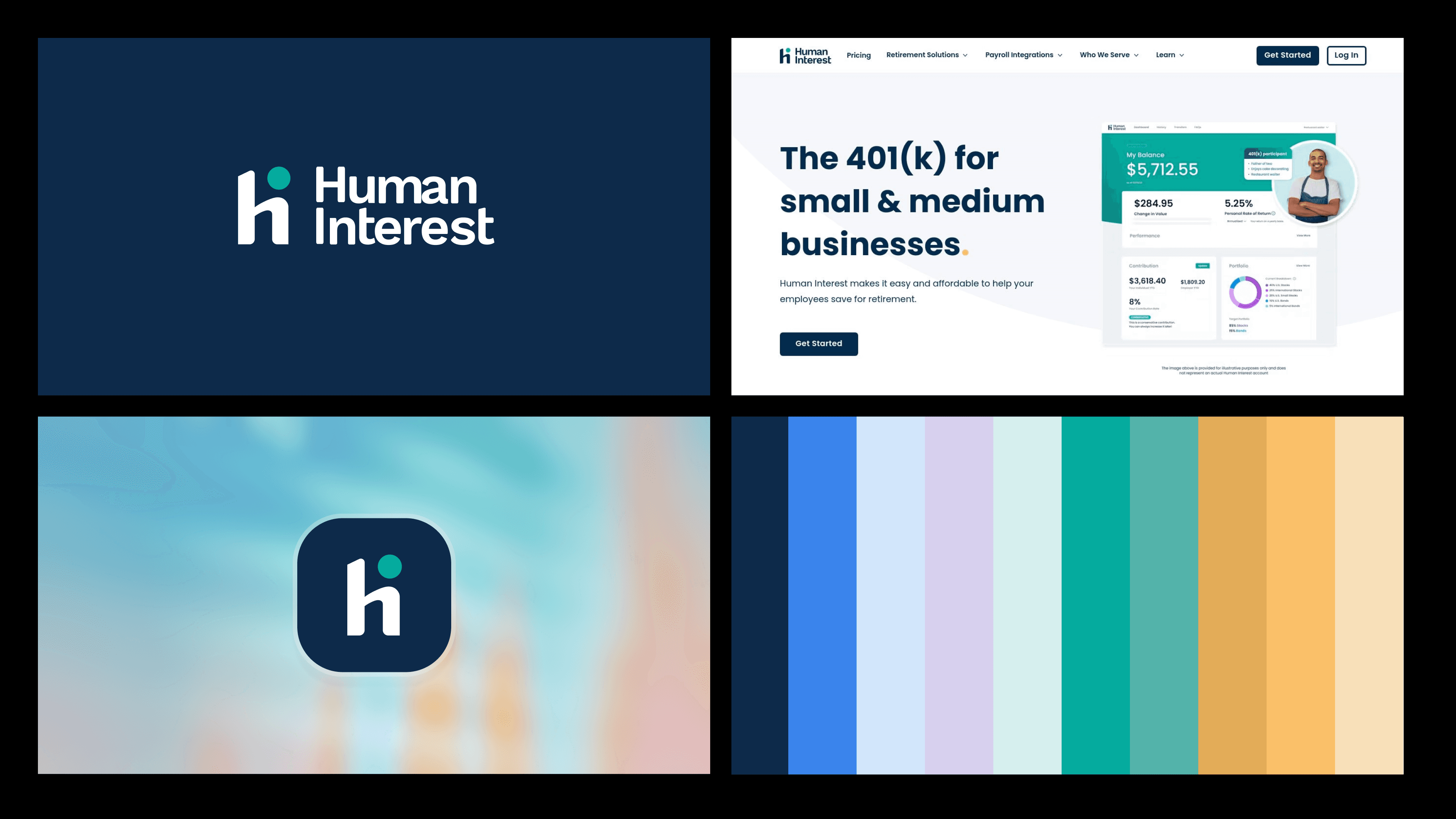
Design system and delivery
The company was moving quickly with a small founding team.
No shared foundation would have forced engineering to resolve the same interaction problems repeatedly. A mature design-system program would have introduced more process than the stage required.
I developed the system alongside product delivery.


Judgment
The defining decision was where complexity should live.
Retirement administration remained regulated, operationally dependent, and financially consequential. A simpler interface could not make those conditions disappear.
The product absorbed complexity when the system had enough information to act reliably. It reused business information, coordinated repeatable administrative work, connected payroll data, validated inputs, tracked approvals, and surfaced exceptions.
Customers retained control over decisions with financial or legal consequences. They needed to understand the plan, the information they were submitting, the effect of their choices, the implementation status, and any action still assigned to them.
Too much exposure would reproduce the administrative burden. Too much abstraction would weaken confidence and make exceptions harder to resolve.
The product reduced work while preserving understanding.
Results
Reduced onboarding friction by 30% through guided retirement plan setup and workflow simplification.
Improved retention by 15% through clearer onboarding and plan administration.
Increased customer lifetime value by 10% through stronger activation and continued product use.
Established the first reusable product and design foundation.
Created shared patterns across plan setup, payroll, compliance, automation, and employee enrollment.
Improved design and engineering alignment through reusable behavior and clearer implementation guidance.
Supported product growth from early concept into a scalable operating foundation.
Impact
Captain401 began with a practical idea. Small businesses should not need enterprise resources to offer employees a retirement plan.
Delivering on that idea required more than moving forms online. The company needed one product model for work previously distributed across paperwork, payroll providers, compliance processes, investment materials, and administrative service.
My role was to help define that model.
The foundation made the service easier to enter, easier to follow, and easier to extend. It also gave the company a consistent way to explain itself across the application, public experience, engineering delivery, and investor communication.
That work remained part of the product’s history after Captain401 became Human Interest.
Role
Founding UX Lead / Principal Product Designer, Contract
2015–2017
Partnered directly with founders Roger Lee and Paul Sawaya and the early engineering team to define the product and experience foundation during the Captain401 stage.
Led work across retirement plan onboarding, payroll integration, compliance, automation, employee enrollment, reusable interaction patterns, product identity, investor communication, and engineering delivery.